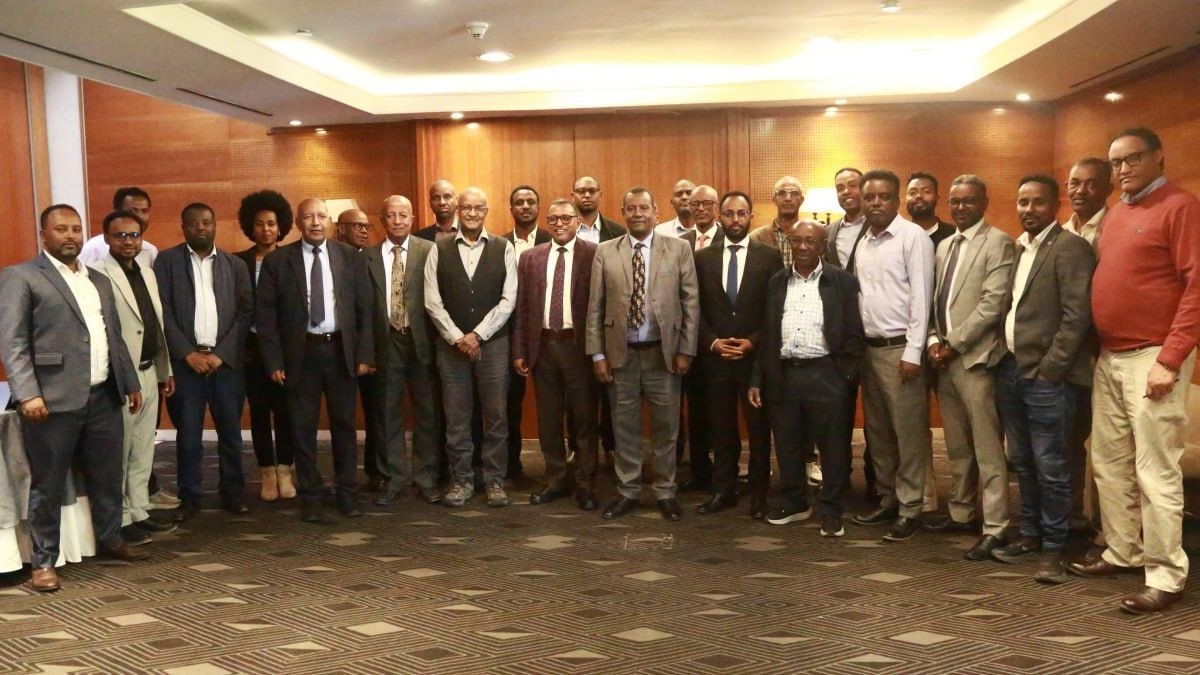
At the 2026 Africa Evidence Summit held in Addis Ababa on 24 July 2026, Habtamu Edjigu of the Policy Studies Institute, together with Yohannes Ayele of the Overseas Development Institute in the United Kingdom and Remco H. Oostendorp of Vrije Universiteit Amsterdam and the Tinbergen Institute in the Netherlands, presented a study entitled “The Rise of Civil Protest: Input Misallocation and Contraction in Ethiopia’s Manufacturing Sector.” The presentation examined how protest-driven conflict affected manufacturing firms in Ethiopia, with particular attention to firms’ access to productive inputs and the mechanisms through which civil unrest affected firm performance.
e presenters explained that there was already substantial evidence of a negative relationship between conflict and aggregate economic activity. However, they noted that considerably less was known about the microeconomic mechanisms underlying these broader economic effects. In particular, they argued that insufficient attention had been given to how conflict affects firms, which constitute the backbone of economic activity.
Against this background, the study sought to answer two central questions. First, it examined how protest-driven civil conflict affected the performance of manufacturing firms in Ethiopia. Second, it investigated the mechanisms through which such conflict affected firms, particularly whether firms experienced an overall contraction in their use of productive inputs or whether conflict resulted in misallocation among different types of inputs.
The presenters said that the research focused on Ethiopian manufacturing firms during the country’s 2014–2018 protest wave. They explained that the study examined how protest-driven conflict affected firms’ input choices and output by distinguishing between two specific mechanisms: input contraction and input misallocation.
They explained that conflict could disrupt firms’ access to essential inputs, including workers, raw materials, and finance. Such disruption could lead to a contraction in overall input use, meaning that firms would have fewer productive resources available. At the same time, conflict could create distortions in markets for particular inputs, causing firms to alter the combination or mix of inputs they used. The researchers referred to this second mechanism as input misallocation.
To investigate these mechanisms, the study linked manufacturing census data from the Central Statistical Agency with geo-coded conflict-event data from the Armed Conflict Location & Event Data Project (ACLED). This linkage enabled the researchers to examine differences in firm outcomes according to their exposure to conflict.
The presenters said that they developed their analytical framework based on the approach of Hsieh and Klenow (2009). They explained that, in the absence of economic distortions, firms operating within the same sector would generally use similar technologies and combine productive inputs in broadly similar proportions.
However, when firms faced distortions affecting access to particular markets or inputs, they would adjust their input choices. For example, if conflict made it more difficult for a firm to access labour, that firm would demand less labour relative to other inputs than firms operating in the same sector but facing less disruption.
The researchers therefore argued that differences in input use between firms in the same sector, when those firms were exposed to different levels or timing of conflict, could provide important information about the extent of conflict-induced distortions.
They further emphasized that conflict could affect firms not only by changing the composition of inputs but also by reducing the overall quantity of inputs available to them. Road closures, worker absenteeism and disruptions in factor markets could force firms to reduce their use of labour and materials. They described this overall reduction as a separate and identifiable contraction channel, distinct from input misallocation.
The presenters then placed Ethiopia’s experience within a broader global context. They observed that conflict events involving protests and demonstrations without the use of violent force had become increasingly important both globally and across Africa.
They argued that protests were increasingly becoming a prominent form through which conflict manifested itself. Consequently, understanding the economic consequences of protest-related disruption was becoming particularly important for understanding how political instability affected firms and economic activity.
Turning to Ethiopia, the presenters described the 2014–2018 period as a major wave of civil protest and conflict. They explained that the immediate trigger emerged in 2014, when the proposed Addis Ababa Integrated Development Master Plan was perceived by many communities as threatening displacement and loss of land. Protests initially spread through Oromia and subsequently extended to Amhara and other parts of the country.
According to the presentation, the conflict escalated substantially between 2014 and 2016, with fatalities increasing sharply and reaching a peak in 2016. The presenters noted that the number of fatalities in 2016 represented roughly a tenfold increase compared with any previous year. The conflict subsequently began to de-escalate in 2018, following the resignation of Prime Minister Hailemariam Desalegn and the appointment of Prime Minister Abiy Ahmed.
The presenters used this period of heightened protest and conflict as an important setting for examining the effects of civil unrest on manufacturing firms.
The presentation identified several channels through which protests could disrupt manufacturing activity.
First, the presenters highlighted road closures. They explained that protesters repeatedly blocked major highways leading into and out of Addis Ababa and connecting the capital with Amhara and Tigray. These disruptions affected both workers commuting to factories and the transportation of inputs and finished products.
Second, they discussed worker absenteeism. Stay-at-home demonstrations, fear of violence and direct participation in protests prevented some workers from reaching their workplaces. As a result, firms could face shortages of labour precisely when they needed to maintain production.
Third, the presenters identified financial disruption as another important mechanism. They noted that remittances declined significantly, from approximately 3.5 percent of GDP in 2014 to about 0.5 percent in 2018. At the same time, banks became more cautious about lending in conflict-affected areas, potentially limiting firms’ access to finance.
Fourth, they discussed physical destruction and damage to businesses. Foreign-owned firms were looted or burned in a number of areas, while domestic firms were also targeted. The presenters emphasized that such damage could have wider upstream and downstream consequences by disrupting relationships between firms and their suppliers and customers.
They also referred to earlier evidence from Ayele and Edjigu (2021), which showed that 50 percent of manufacturing firms reported that at least one of their suppliers had been affected by conflict. Among those firms, 64 percent said that the relationship with the affected supplier had been interrupted, while more than 90 percent considered access to inputs to be a severe constraint.
The researchers explained that their analysis combined two major sources of information. The first was the Large and Medium Manufacturing Census, covering Ethiopian manufacturing firms from 2012 to 2018. The second was ACLED conflict data, which provided geo-coded information on conflict events, including protests, riots, battles and violence against civilians.
The two datasets were linked at the district, or woreda, level. This allowed the researchers to determine whether firms were located in districts that experienced conflict and to identify the timing of the first conflict exposure.
The presenters explained that they employed a difference-in-differences research design based on the timing of conflict exposure. The approach compared firms located in districts during the year when conflict first occurred with firms in districts that had not yet experienced conflict.
The treatment group consisted of firms located in districts where conflict began during the 2012–2018 period. For these firms, the researchers measured the effects during the first year in which conflict occurred.
The control group consisted of firms located in districts that had not experienced any conflict fatalities during the study period. The researchers explained that these “not-yet-conflicted” districts provided a counterfactual against which the outcomes of firms in newly conflict-affected districts could be compared.
The key identifying assumption was that districts that had not yet experienced conflict provided a valid approximation of what would have happened in districts that subsequently experienced conflict had those districts not been exposed to conflict. The researchers said that they tested the credibility of this assumption using event-study placebo trends.
The presenters concluded that the study sought to move beyond the established evidence that conflict reduces aggregate economic activity by examining the specific mechanisms through which civil protest affects firms. By combining firm-level manufacturing data with detailed geo-coded conflict information, the research aimed to show whether firms responded to conflict primarily by reducing their overall use of inputs, by changing the composition of their inputs, or through a combination of both mechanisms.
They emphasized that understanding these firm-level responses was important for explaining how episodes of civil protest can translate into broader economic contraction. The study therefore contributed to a more detailed understanding of the relationship between political instability, market disruptions and manufacturing performance in Ethiopia.
Presenting the results of the study, Habtamu Edjigu and his co-authors explained that the evidence pointed primarily to contraction in firms’ use of productive inputs rather than misallocation among those inputs. Based on their analysis of more than 10,000 manufacturing firms, they found that protest-driven conflict substantially reduced firms’ access to and use of labour and materials.
The researchers reported that labour use declined by approximately 16 percent following exposure to protest-driven conflict, while total materials declined by about 10 percent. Domestic materials were also significantly reduced, by approximately 13 percent. In contrast, the use of capital and imported materials did not show statistically significant changes. These findings suggested that the main economic consequence of conflict was not that firms fundamentally changed the proportions in which they combined different inputs, but rather that they experienced an overall reduction in the inputs available for production.
The presenters further reported that the effects of conflict were not uniform across all manufacturing firms. The negative effects were particularly concentrated among large and domestically owned firms, while firms with foreign capital appeared considerably more resilient to the disruption.
Among large firms, labour inputs declined by approximately 27 percent, while total materials fell by about 21 percent. Domestic materials also declined by roughly 21 percent, while imported materials decreased by approximately 26 percent. Similarly, domestically owned firms experienced substantial reductions in their use of labour and materials, with labour declining by about 23 percent and total materials by approximately 11 percent.
In contrast, the researchers noted that foreign-capital firms showed relatively limited effects. They suggested that the resilience of foreign-owned firms could provide useful lessons for understanding how firms can protect their operations against conflict-related shocks, particularly through access to finance, diversified supply chains and stronger crisis-management capacity.
Another important finding of the study concerned the impact of conflict on employment by gender. The presenters reported that female labour declined by approximately 22 percent, indicating that women workers were disproportionately affected by protest-driven conflict.
By comparison, male labour declined by about 7 percent. The researchers therefore emphasized that the effects of civil conflict extended beyond immediate reductions in production and could have broader implications for gender equality in the labour market.
They also examined the effects according to workers’ skill levels. Skilled labour declined by approximately 10 percent, while the estimated reduction in unskilled labour was not statistically significant. This suggested that conflict could affect different categories of workers in different ways, although the gender dimension was particularly pronounced.
The researchers then presented evidence on the consequences of input disruptions for firms’ overall production. They reported that the negative effects on output were concentrated primarily among large and domestically owned firms.
For large firms, output declined by approximately 17 percent, while output among domestic firms fell by around 9 percent. In contrast, the researchers found no statistically significant output reductions among medium-sized firms or firms with foreign capital.
According to the presenters, these findings reinforced the earlier conclusion that the principal channel through which protest-driven conflict affected manufacturing firms was the contraction of productive inputs. Firms that were particularly dependent on domestic labour and material markets appeared more vulnerable to disruptions caused by civil unrest.
In summarizing the findings, the researchers explained that the study used a quasi-experimental research design and information from more than 10,000 manufacturing firms to examine the economic consequences of protest-driven conflict in Ethiopia. They concluded that civil conflict significantly reduced firms’ use of labour and material inputs and, consequently, lowered production among some categories of firms.
They emphasized that the adverse effects were particularly concentrated among large and domestically owned firms, whereas foreign-capital firms appeared comparatively resilient. They also highlighted the disproportionate reduction in female employment, arguing that this raised concerns about the possibility of longer-term gender disparities in employment, earnings and career trajectories.
Importantly, the study found that most of the observed reduction in output was attributable to input contraction rather than inefficient allocation or combination of inputs. In other words, firms were primarily producing less because conflict reduced their access to essential productive resources, rather than because they were substantially misallocating the inputs that remained available.
Based on these findings, the presenters argued that policy responses should focus on strengthening firms’ resilience to input shocks in conflict-affected areas. Since contraction rather than misallocation was the dominant mechanism, they suggested that policies should prioritize emergency access to finance, diversification of supply chains and targeted labour-market support.
They argued that improving firms’ ability to access emergency financing could help businesses maintain production during periods of instability. Similarly, encouraging supply-chain diversification could reduce firms’ dependence on individual suppliers or transportation routes that might be disrupted during protests and conflict. Labour-market support could also help firms retain workers and reduce employment losses when mobility and workplace access become difficult.
The researchers also highlighted the need to learn from the relative resilience of foreign-capital firms. They noted that foreign-owned firms experienced little or no significant output loss despite sometimes being among the targets of protest-related disruption.
They suggested that further research should examine whether this resilience was associated with differences in financing arrangements, supplier diversification, access to international networks or crisis-management strategies. Understanding these characteristics, they argued, could help policymakers and domestic firms develop strategies to withstand future episodes of political and economic disruption.
The presenters emphasized that the sharp decline in female employment deserved particular policy attention. They argued that the approximately 22 percent reduction in female labour associated with conflict could produce longer-term “scarring” effects if women who lose employment during periods of instability subsequently face difficulties returning to the labour market.
They therefore recommended monitoring women’s employment and earnings beyond the immediate conflict period to determine whether temporary employment losses translate into persistent disadvantages in career progression and income.
Finally, the researchers indicated that future research would examine the longer-term effects of protest-driven conflict on firm productivity, investment and employment. They also identified the need to investigate more closely the long-term consequences for female workers, particularly their subsequent employment opportunities, earnings and career trajectories.
Overall, the study demonstrated that the economic costs of civil protest in Ethiopia extended beyond immediate physical destruction. The researchers argued that disruptions to labour, materials, finance and supply chains could substantially constrain manufacturing activity. Their central policy message was therefore that strengthening firms’ capacity to withstand input shocks—and protecting workers, particularly women, from persistent labour-market consequences—should form an important component of economic policy in conflict-affected areas.