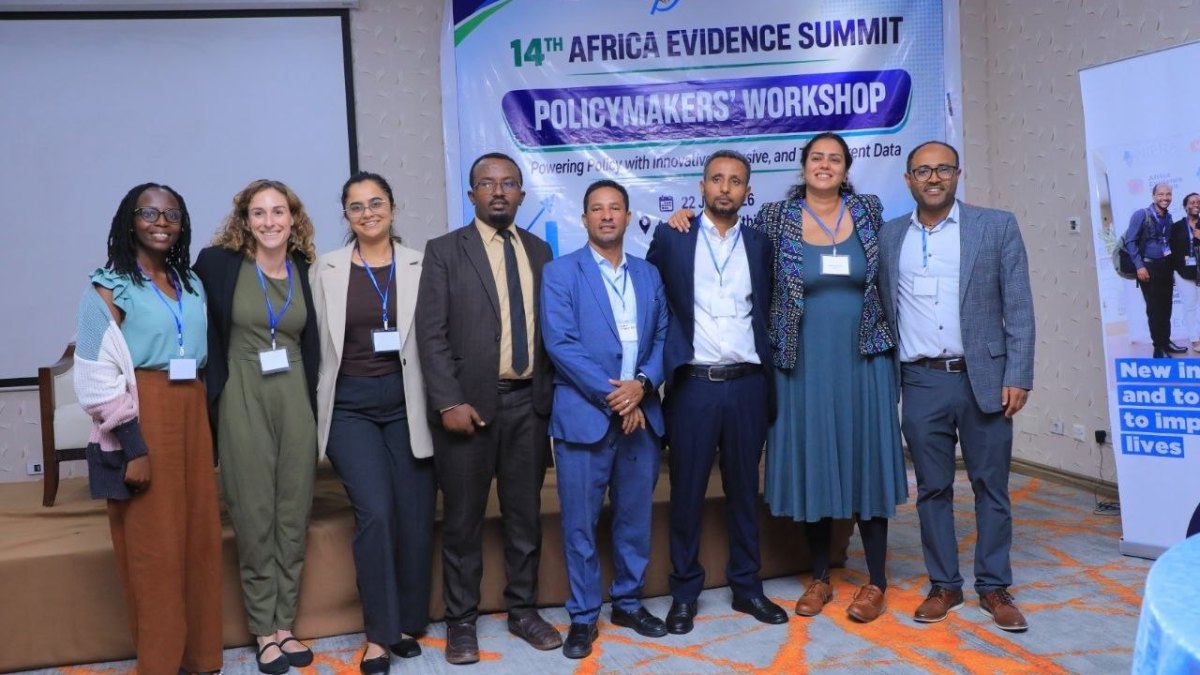
In the Africa Evidence Summit, July 2026, three Teach For All network partners in Africa have collaborated to develop and validate new tools for measuring students’ social-emotional learning (SEL), with a particular focus on collaboration, communication and empathy.
Presenting the initiative, Joakim Okeyo of Teach For Kenya explained that the Collaboration on Measuring Social-Emotional Learning in Africa (CoMSELA) project was established in response to persistent challenges in measuring students’ whole-child development.
Okeyo said the initiative was guided by the principle that “we cannot improve what we cannot measure.” He noted that although whole-child development had become a priority across the African education network, some of the skills considered most important for students’ long-term development remained among the most difficult to measure accurately.
According to Okeyo, one of the major challenges was the lack of a shared and contextually relevant definition of SEL competencies among education partners. He explained that organizations often lacked a common understanding of what specific social-emotional competencies comprised and how they should be assessed.
He also highlighted what he described as a false dichotomy between SEL and academic achievement. He said social-emotional learning was often viewed as competing with academic outcomes, when in reality the two should be considered complementary components of students’ development.
Another challenge, he said, was the limited availability of structured, valid and replicable instruments for measuring non-academic outcomes in the region. The scarcity of reliable tools had made it difficult for education programmes to assess students’ development beyond conventional academic indicators.
Okeyo explained that CoMSELA was established as a pilot project bringing together three African network partners to co-develop assessment measures for outcomes that they all considered important but had previously struggled to measure.
He said the project adopted a co-development approach in which the partners first agreed on common constructs and subsequently developed the assessment instruments collaboratively as a network public good.
The instruments were designed to serve two purposes: supporting classroom-level monitoring by teachers and contributing to programme-level monitoring, evaluation, research and learning (MERL), including impact assessment and donor reporting.
He added that the participating organizations shared several contextual characteristics, including a common age range of approximately 6–14 years, aligned school calendars and dedicated in-country capacity. These similarities helped create conditions for developing assessment tools that could be applied across different African education settings.
Okeyo said the main objective of the project was to develop new and scalable solutions for more accurately measuring student whole-child development. The initiative was anchored in Teach For All’s intended outcomes of developing students as leaders of a better future and developing extraordinary leaders in the classroom.
The study sought to answer three principal questions. First, it examined which SEL outcomes were shared and prioritized by all three partners and which were particularly difficult to measure. Second, it assessed which assessment formats were appropriate, scalable and feasible in participating classrooms. Third, it investigated whether the resulting tools could generate valid and reliable evidence of non-academic outcomes.
The presentation identified collaboration, communication and empathy as the three shared SEL domains emerging from the participating organizations’ visions of student leadership.
Okeyo explained that collaboration referred to students’ ability to work with others toward shared goals through social and cognitive interdependence. Its key subdomains included communication, negotiation, problem-solving, critical thinking and teamwork.
Communication was described as the ability to exchange ideas and feelings clearly in order to achieve mutual understanding and provide constructive feedback. Its subdomains included active listening, feedback and response, assertiveness, presentation and interpersonal communication.
Empathy, meanwhile, was defined as the ability to sense, understand and respond to the emotions and perspectives of others. The assessment framework considered cognitive, emotional, somatic, compassionate and empathic-accuracy dimensions of empathy.
The presenters explained that the tools were developed through a four-phase process.
The first phase involved conceptualization and design, including preparation of a concept note, formation of the project team, alignment of constructs and a review of relevant literature.
The second phase focused on instrument development. This included creating an assessment framework, consolidating and reviewing assessment items, and developing hybrid performance tasks.
The third phase involved large-scale piloting. In-country teams were recruited and trained, data were collected across three countries, and the resulting data were cleaned, entered and verified.
The final phase focused on analysis and recommendations, including reliability and validity checks, a knowledge-exchange workshop, reporting and identification of next steps.
Okeyo said the project considered five potential assessment formats and assessed each against its suitability for purpose, ability to address measurement challenges, programme priorities, feasibility and sustainability.
The first was self-report measures, which could provide direct feedback from students and were relatively cost-effective and easy to repeat. However, they could create reading burdens and response bias, particularly among younger students.
The second was performance tasks, which could capture real and observable behavioural change but were more complex and resource-intensive to administer.
The third was observational measures, which could provide real-time evidence of student behaviour but required trained observers and significant logistical resources.
The fourth was global or classroom rating scales, which could provide teachers with relatively easy ways to assess students but could be vulnerable to rater bias.
The fifth was standardized assessments, which could offer uniform and broad measurement but were considered relatively weak for assessing non-academic outcomes and costly to maintain.
Following this assessment, the project developed two complementary instruments: student self-reports and hybrid performance tasks.
The student self-report instruments used Likert-type rating scales, with one instrument developed for each of the three domains. Each contained approximately 40–45 items, mapped to the relevant subdomains. The items underwent an iterative and collaborative review process.
The presenters said the self-report tools were designed to be engaging, scalable and relatively inexpensive to administer repeatedly.
The second instrument consisted of hybrid performance tasks combining observation and group performance. Two small-group tasks were developed for each domain, resulting in six tasks overall.
Teachers assessed students using systematic rubrics, with the possibility of individual-level scoring within small groups. The approach was intended to capture observable behaviour in authentic contexts.
The project also incorporated triangulation by design. The presenters explained that both instruments were administered to the same students for each domain, allowing self-reported information to be compared with observed evidence. Each performance task was scored primarily against its main domain while also providing secondary indicators for the other two domains.
The presenters said the assessment tools were deliberately designed to accommodate diverse classroom environments.
For self-reports, the project tested one-to-one administration, in which one student worked with one administrator at a time. This approach provided maximum assistance to students who needed reading support.
A group administration model was also tested, allowing students to complete their survey sheets independently in a classroom setting.
An assisted-group approach was further tested, under which an administrator read each question aloud to a group of students to improve comprehension.
For performance assessments, the project used small-group observation, in which students performed tasks in groups while their individual performance was scored using a standardized rubric.
According to the presenters, field notes from administrators indicated that each approach was suitable for its intended context.
The project subsequently conducted a large-scale pilot involving 2,369 respondents from Grades 4–6 classrooms in Kenya, Uganda and Zimbabwe.
The presenters said the pilot was designed with rigorous quality-control measures. Reliability, model fit, item correlations and response patterns were assessed against pre-established benchmarks.
Both self-report and performance-task instruments were piloted across the three domains of collaboration, communication and empathy.
For collaboration, the pilot included 910 self-report respondents, while performance-task participation ranged from 221 to 306 students. For communication, there were 775 self-report respondents, with performance-task participation ranging from 199 to 260. For empathy, 684 students participated in the self-report assessment, while performance-task participation ranged from 175 to 234.
The presenters clarified that the number of participants in performance tasks varied depending on the specific task.
The initial results showed strong reliability across the instruments, according to the presentation.
The presenters explained that the findings indicated that the items within each instrument worked together consistently to measure the intended construct. Both Cronbach’s alpha and McDonald’s omega exceeded the 0.70 reliability benchmark across all three domains.
For collaboration, Cronbach’s alpha ranged from 0.82 to 0.89, while McDonald’s omega ranged from 0.85 to 0.89.
For communication, Cronbach’s alpha ranged from 0.82 to 0.88, while McDonald’s omega ranged from 0.83 to 0.90.
For empathy, Cronbach’s alpha ranged from 0.83 to 0.90, while McDonald’s omega ranged from 0.83 to 0.91.
The presenters said the results provided encouraging evidence that the instruments were consistently measuring the intended SEL domains.
The presentation highlighted the importance of developing contextually appropriate and scalable approaches to measuring whole-child development in Africa.
Okeyo explained that the CoMSELA experience demonstrated how education organizations could work collaboratively to address common measurement challenges rather than developing isolated tools independently.
The combination of student self-reports and observed performance tasks, he noted, offered an opportunity to generate more comprehensive evidence by comparing what students reported about their abilities with what they demonstrated through actual activities.
The initiative also demonstrated the importance of designing assessment tools that could be adapted to different classroom conditions, particularly where differences in reading ability, teacher capacity and available resources could affect implementation.
Overall, the CoMSELA project showed that collaborative development, contextual adaptation and rigorous validation could help strengthen the measurement of social-emotional learning in African education systems. The findings presented from Kenya, Uganda and Zimbabwe suggested that the newly developed tools had strong reliability and could provide a foundation for further research, classroom monitoring, programme evaluation and evidence-based decision-making on students’ whole-child development.
CoMSELA Tools Demonstrate Strong Validity and Reliability for Measuring Social-Emotional Learning in African Classrooms
Africa Evidence Summit, July 2026 — The Collaboration on Measuring Social-Emotional Learning in Africa (CoMSELA) project has reported that its newly developed assessment tools demonstrated strong evidence of reliability and validity in measuring students’ collaboration, communication and empathy across participating African classrooms.
Presenting the findings, Joakim Okeyo of Teach For Kenya explained that while reliability established whether an assessment tool measured a particular construct consistently, validity addressed whether it was measuring the right construct. He said the pilot results provided encouraging evidence on both dimensions.
Okeyo reported that the analysis of Root Mean Square Error of Approximation (RMSEA) showed that the assessment models achieved acceptable fit across all three domains.
The RMSEA values were reported as 0.03, 0.06 and 0.05, respectively, all of which were below the pre-established benchmark of 0.08.
The analysis also showed that item-total and item-rest correlations exceeded the required r > 0.20 threshold, providing further evidence that the individual items were appropriately related to the constructs being measured.
The presenters further reported that response patterns showed near-complete responses, with minimal evidence of respondent fatigue or invalid answers. They said this suggested that students were generally able to engage successfully with the assessment instruments.
Following the pilot, the CoMSELA team refined the instruments into a finalized toolkit covering the three domains of collaboration, communication and empathy.
The final self-report toolkit contained 115 items in total.
For the performance assessment component, the project finalized two small-group tasks for each of the three domains, resulting in six tasks containing a total of 30 indicators.
The refinement process reduced the original number of self-report items from 130 to 115. Collaboration remained at 40 items, communication was reduced from 45 to 39 items, and empathy was reduced from 45 to 36 items.
The presenters explained that some secondary indicators were found to correlate so strongly with their primary constructs that they were reclassified as primary indicators. Items considered weak were subsequently removed through consensus among the project partners.
The presentation emphasized that the project was not intended merely to create assessment instruments but also to strengthen Monitoring, Evaluation, Research and Learning (MERL) capacity among participating organizations.
Okeyo explained that the tools had been designed for purpose-driven measurement, particularly classroom-level monitoring that could actively support holistic child development rather than simply serve reporting requirements.
The presenters said the initiative sought to strengthen the capacity of teachers and coaches to collect, interpret and use data formatively. Partner MERL teams and coaches were expected to support teachers in developing the skills necessary to use the assessment tools effectively.
They also explained that the findings could inform how social-emotional learning was integrated into teacher training and classroom observation, allowing evidence from the assessments to influence broader educational practice.
The presentation further highlighted the potential of the tools to generate evidence that could support investment in whole-child development.
The presenters argued that data-driven evidence of improvements in student leadership and social-emotional competencies could help programmes demonstrate impact and attract funding and institutional support.
They therefore positioned CoMSELA not simply as a measurement project but as an initiative aimed at building a stronger evidence base for investment in students’ holistic development.
Despite the positive findings, the presenters acknowledged several challenges encountered during the development and piloting of the tools.
One major challenge concerned the training requirements associated with the assessment process.
The presenters explained that extensive training was required for research assistants, programme officers and fellows to ensure that they understood the concepts being measured and were able to assess learners critically and consistently.
They recommended providing intentional training for teachers and coaches, particularly on how to work with children with special educational needs.
The presenters also identified logistical challenges, particularly the resource requirements associated with performance tasks.
They explained that performance-based assessments could be difficult to implement sustainably in large classrooms because they required additional personnel, time and other resources.
To address this challenge, they recommended complementing or triangulating performance tasks with more scalable assessment approaches, including group-administered self-report instruments.
This combination, they argued, could help balance the rigour of behavioural observation with the feasibility and scalability of self-reported assessments.
Inclusivity and Children With Special Needs
The presenters explained that it was sometimes difficult to identify activities that were appropriate and accessible to children with different special needs, including students experiencing hearing, physical or speaking difficulties.
They recommended continuous capacity building for teachers and coaches so that they could use the tools appropriately and retain the necessary knowledge and skills over time.
They also emphasized the need to ensure that assessment activities did not inadvertently exclude students with disabilities.
The presenters further cautioned that self-report instruments could introduce bias when students struggled to read or understand the questionnaires.
They explained that language differences could also interfere with measurement and potentially affect the construct validity of the assessment.
To address these challenges, they recommended providing multiple mechanisms for administering the tests, including assisted administration and the use of comprehension aids.
Such flexibility, they said, would help ensure that students’ assessment results reflected their actual social-emotional competencies rather than their reading ability or familiarity with the language used in the questionnaire.
In summarizing the findings, the presenters identified three major lessons from the CoMSELA initiative.
Social-Emotional Learning Can Be Measured
First, they concluded that collaboration, communication and empathy could be measured reliably and validly, including in resource-constrained classroom environments.
They said the results demonstrated that non-academic outcomes did not have to remain difficult-to-measure concepts and that appropriately designed instruments could generate meaningful evidence of students’ social-emotional development.
Collaboration Strengthens Measurement
Second, they emphasized that collaboration among African education organizations was central to the project's success.
The three partners had jointly developed a shared and contextually relevant toolkit as a network public good, rather than simply importing an assessment instrument developed elsewhere.
They argued that this collaborative approach allowed the tools to respond more effectively to the realities of African classrooms while creating opportunities for shared learning and adaptation.
Triangulation Is Critical
Third, the presenters highlighted triangulation as a key lesson.
They explained that pairing scalable self-report assessments with behavioural performance tasks allowed the project to balance rigour, feasibility and inclusion.
Self-reports offered a relatively scalable and cost-effective way of collecting information from large numbers of students, while performance tasks provided opportunities to observe students’ behaviour directly.
Combining the two approaches, they argued, could provide a more comprehensive picture of students’ social-emotional competencies.
The presenters emphasized that the completion of the CoMSELA toolkit represented only the first step.
They explained that the project had produced a shared and validated toolkit that was intended to function as an open, contextually relevant public good. They invited additional organizations and education partners to adapt, extend and sustain the work.
The first priority, they said, would be to embed the tools into everyday MERL systems, while expanding their application to additional grades and incorporating further SEL competencies.
The presenters also invited interested Teach For All partners and other organizations to collaborate in adapting the toolkit to their own educational and cultural contexts.
They emphasized that adaptation should take place collaboratively rather than treating the existing toolkit as a fixed product.
They further called for collaboration with researchers to validate, localize and translate the instruments.
Such partnerships, they said, would help strengthen the scientific evidence supporting the tools while ensuring that they remained appropriate for different linguistic and cultural settings.
Finally, the presenters called for engagement with funders and education ministries to provide the resources necessary to scale and sustain the initiative over time.
They emphasized that sustained institutional and financial support would be essential if the tools were to move beyond the pilot stage and become part of routine education monitoring and improvement systems.
The presentation also outlined the methodological benchmarks used to assess and refine the instruments.
The project established a minimum reliability threshold of Cronbach’s alpha and McDonald’s omega greater than 0.70. The benchmark for both model fit and item fit was an RMSEA below 0.08, while item-total and item-rest correlations were required to exceed r > 0.20.
Response patterns were also screened using frequency plots to identify unusual or problematic response behaviour.
The refinement process reduced the number of self-report items from 130 during the pilot to 115 in the final toolkit.
For collaboration, the number of items remained at 40, while its primary indicators were reduced from 11 to 9.
For communication, items were reduced from 45 to 39, while primary indicators increased from 10 to 12.
For empathy, items were reduced from 45 to 36, while primary indicators decreased from 13 to 9.
Overall, the primary indicators were reduced from 34 to 30.
The presenters explained that some secondary indicators were so strongly correlated with their respective primary constructs that they were reclassified as primary indicators, while weaker items were removed through consensus among the project partners.
The CoMSELA presentation demonstrated that African-led collaboration can generate contextually appropriate, reliable and valid tools for measuring social-emotional learning.
The findings showed that collaboration, communication and empathy could be assessed systematically in African classrooms, while also highlighting the practical challenges involved in training, logistics, inclusivity, language and large-scale implementation.
The presenters stressed that the ultimate value of the initiative would depend on moving beyond measurement toward using evidence to improve teaching, strengthen whole-child development, build MERL capacity and inform investment in education.
They concluded that CoMSELA had created a foundation for a broader collaborative effort in which education organizations, researchers, governments and funders could work together to scale, adapt, validate and sustain social-emotional learning measurement across Africa.