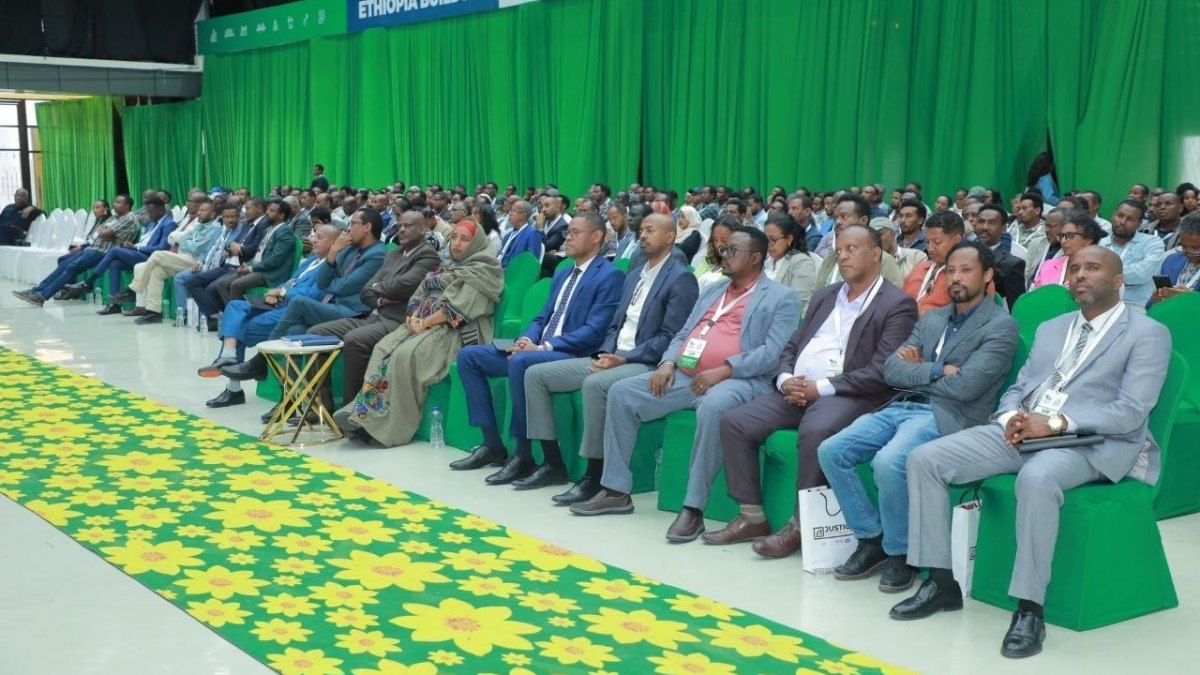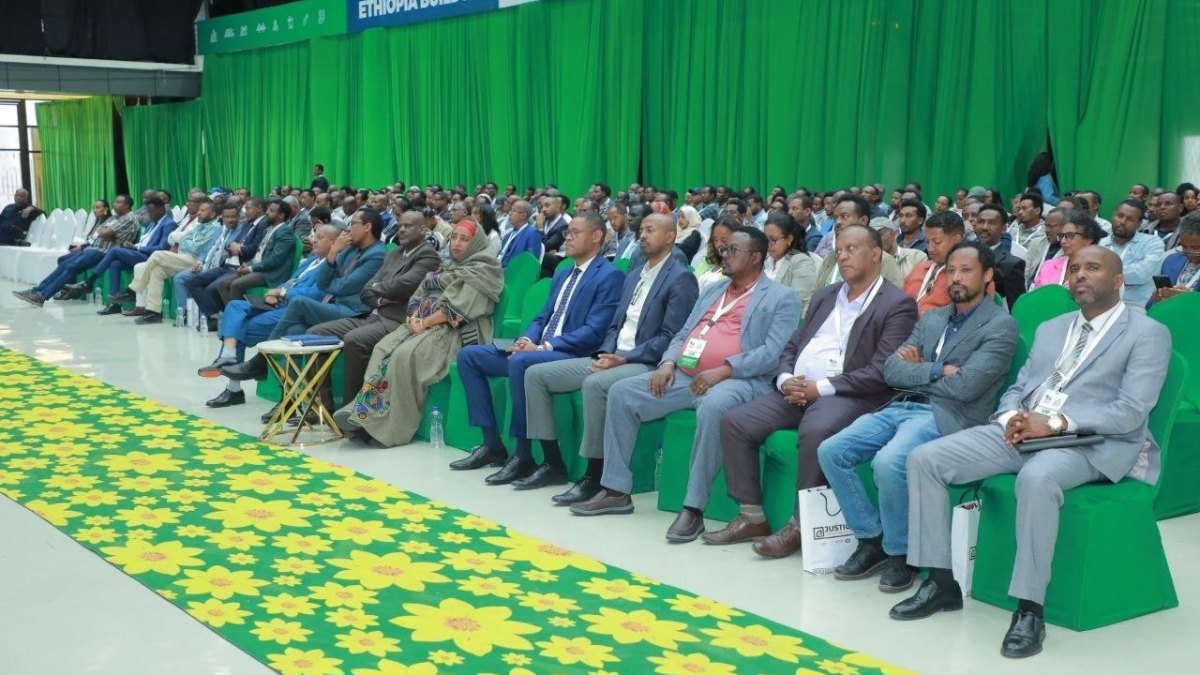
A consultative workshop on “Scaling Childcare from Local to National: Leveraging Lessons from Addis Ababa to Support a National Quality Framework and Sustainable Financing in Ethiopia” was held on Thursday, August 13, 2026, at the Mado Hotel in Addis Ababa. The workshop brought together stakeholders to discuss evidence, lessons, and policy options for expanding accessible, affordable, and quality childcare services across Ethiopia.
The workshop focused on drawing lessons from childcare initiatives in Addis Ababa and exploring how these experiences could inform the development of a national childcare quality framework and sustainable financing mechanisms.
H.E. Mr. Fekadu Tsega, Director General of the Policy Studies Institute, delivered the opening remarks. In his remarks, he emphasized the importance of strengthening childcare systems as part of Ethiopia’s broader human capital development and inclusive growth agenda.
In his opening remarks, H.E. Mr. Fekadu Tsegaye, Director General of the Policy Studies Institute (PSI), warmly welcomed participants to the consultative workshop and expressed his appreciation for their participation in what he described as an important national dialogue on childcare development in Ethiopia.
He acknowledged the presence of Major General Ahmed Hamza, Deputy Director General of PSI; heads of regional bureaus and chairs of Early Childhood Development (ECD) Technical Committees; members of regional ECD Technical Committees; representatives of development partners and various stakeholder institutions; researchers and experts; and other workshop participants. On behalf of the Policy Studies Institute, he expressed his gratitude to all participants who had travelled from different regions and institutions to contribute to the consultation.
H.E. Fekadu explained that the primary objective of the workshop was to collectively identify strategic directions for building a quality, accessible, inclusive, and sustainable childcare system across Ethiopia. He noted that the consultation was particularly important because it sought to draw on concrete evidence and practical experiences generated through childcare initiatives in Addis Ababa and use those lessons to inform a broader national approach.
He emphasized that childcare should not be understood simply as a service intended to ensure the immediate care and protection of children. Rather, he stressed that early childcare is closely connected to the broader social and economic development of the country. Quality childcare, he explained, contributes to children's well-being and holistic development while simultaneously creating conditions that enable women to participate more actively in economic activities, employment, and the labor market.
He further noted that accessible childcare services contribute to family well-being and long-term human capital development. By providing children with appropriate care and developmental opportunities during their formative years, the country can strengthen the foundations of its future human capital. At the same time, reliable childcare services can reduce the care burden on families and enable parents, particularly women, to pursue employment, education, entrepreneurship, and other productive activities.
The Director General acknowledged that Ethiopia has already developed a number of policy and legal frameworks recognizing the importance of early childhood development and childcare. However, he pointed out that having policies and legal frameworks alone is not sufficient to guarantee quality and accessible services on the ground. He stressed that translating these commitments into effective, inclusive, and sustainable childcare services remains a significant national priority.
He particularly drew attention to the variations and disparities that currently exist among regions and institutions in relation to childcare service delivery. These differences, he explained, are evident in areas such as institutional capacity, financing arrangements, quality assurance mechanisms, service standards, human resources, and monitoring and evaluation systems.
Against this background, H.E. Fekadu emphasized that Ethiopia's challenge is not simply to increase the number of childcare services or expand their physical availability. Rather, he argued that the country needs to develop an integrated national childcare system that can ensure consistency and quality while allowing for appropriate adaptation to different regional and local contexts.
He explained that such a national system should clearly define quality standards, sustainable financing mechanisms, institutional responsibilities, accountability arrangements, and monitoring systems. Establishing clarity in these areas, he noted, would help ensure that childcare services are not only expanded but are also safe, inclusive, affordable, developmentally appropriate, and sustainable over time.
The Director General also highlighted the contribution of the Policy Studies Institute's research and evidence-generation efforts in this area. He explained that, through the “Scaling Care Innovations in Africa” project, implemented with support from Canada's International Development Research Centre (IDRC), PSI had undertaken extensive research on the childcare system in Addis Ababa.
He noted that the research was intended to generate concrete evidence and practical lessons that could contribute to improving childcare policy and practice in Ethiopia. The work had examined different dimensions of the childcare system and generated lessons relating to service delivery models, institutional arrangements, financing options, quality assurance, human resource capacity, and coordination among institutions.
According to H.E. Fekadu, these lessons provide an important foundation for considering how childcare services could be expanded from local initiatives toward a more coordinated national system. However, he emphasized that the purpose of the consultation was not to simply replicate or copy the Addis Ababa experience across the country.
Instead, he encouraged participants to critically examine the evidence and ask important questions about what could realistically be transferred, adapted, or improved in other contexts. He urged participants to consider what had worked well in Addis Ababa, why particular approaches had succeeded, which elements could be scaled up in other regions, and what conditions would be necessary for successful implementation elsewhere.
At the same time, he emphasized that Ethiopia should not limit itself to lessons generated from Addis Ababa. He called on participants to identify and share successful childcare practices and innovations emerging from different regions of the country, noting that valuable experiences and locally appropriate solutions may already exist in other parts of Ethiopia.
He therefore described the workshop as an opportunity for mutual learning and collective problem-solving, rather than a one-directional presentation of a single model. He encouraged regional representatives, government institutions, development partners, researchers, and other stakeholders to contribute their experiences, evidence, concerns, and recommendations.
H.E. Fekadu stressed that the ultimate goal of the consultation was to jointly map out a pathway toward a unified national childcare system that builds on evidence while recognizing Ethiopia's regional diversity and institutional realities. Such a system, he explained, should bring together the strengths and lessons of existing initiatives while addressing gaps in quality, access, financing, institutional coordination, and accountability.
In his opening remarks, he emphasized the importance of collective commitment, evidence-based policymaking, and sustained collaboration among stakeholders in advancing Ethiopia's childcare agenda. He expressed his confidence that the discussions and recommendations generated during the workshop would contribute to the development of practical and strategic directions for expanding quality childcare services and strengthening the country's broader early childhood development and human capital agenda.
H.E. Mr. Fekadu Tsegaye, Director General of the Policy Studies Institute, outlined the four key strategic objectives that would guide the day's deliberations. He explained that the workshop was designed not only to review existing experiences but also to generate concrete evidence and policy directions that could support the development and implementation of a comprehensive national childcare system.
First, H.E. Fekadu stated that the workshop would contribute to conducting a national childcare status mapping and analysis. He explained that a comprehensive mapping exercise would provide an evidence-based understanding of the current state of childcare services across the country. This would include assessing existing service provision, identifying gaps and challenges, documenting regional innovations and good practices, and examining the institutional and contextual conditions that could enable childcare services to be expanded.
He emphasized that having a clear picture of the current childcare landscape would be essential for effective policymaking and planning. By identifying where services exist, who they serve, what models are being implemented, and where major gaps remain, policymakers would be better positioned to determine realistic priorities for national expansion.
Second, he highlighted the importance of conducting a cost-benefit analysis of childcare services. He explained that such an analysis would provide evidence on both the costs and the broader benefits associated with establishing and managing quality childcare services.
According to H.E. Fekadu, the analysis would consider the benefits of childcare not only for children but also for women, families, employers, and the government. It would examine how access to childcare can influence women's participation in the labor market, household well-being, productivity, employment opportunities, and job creation.
He stressed that generating such evidence would help shift the way childcare is perceived in policy and public discussions. Rather than viewing childcare simply as a government expenditure or social cost, he argued that the country should recognize it as an important investment in human capital and economic development. Evidence on the economic and social returns of childcare, he noted, would help policymakers make stronger and more informed investment decisions.
Third, he identified the development of a Five-Year National Childcare Financing and Implementation Strategy as another major objective. He explained that the strategy would require broad consultation among stakeholders and should provide a realistic roadmap for the phased expansion of childcare services across Ethiopia.
The strategy, he noted, would need to address questions concerning sustainable sources of financing, institutional responsibilities, and the respective roles of federal and regional governments. It would also need to consider how the private sector, communities, development partners, and other stakeholders could contribute to childcare provision and financing.
He emphasized that successful national scaling would require clear mechanisms for coordinating the different actors involved in childcare. Without effective coordination, he noted, efforts could remain fragmented and resources could be used inefficiently. The proposed strategy would therefore seek to establish a coordinated and sustainable framework for implementation.
Fourth, H.E. Fekadu emphasized the need to enrich the National Quality Assurance and Monitoring Framework for childcare. He explained that expanding childcare services would have limited value if expansion was not accompanied by mechanisms to ensure and continuously improve quality.
He stated that the quality framework should address a range of issues, including national quality standards, minimum infrastructure requirements, caregiver competencies, staffing criteria, licensing and regulatory systems, and monitoring and evaluation mechanisms. It should also clarify institutional mandates and establish appropriate key performance indicators (KPIs) for measuring the quality, effectiveness, and impact of childcare services.
He emphasized that the objective should therefore be not merely to increase the number of childcare centers but to ensure that children across the country receive services that meet appropriate standards of safety, care, development, inclusion, and quality.
Turning to the focus of the day's discussions, H.E. Fekadu emphasized that the unique significance of the workshop was not simply to present or celebrate the Addis Ababa childcare experience. Rather, he explained that the real value of the consultation would come from collectively identifying the lessons that could contribute to a national system while taking into account the diverse realities, capacities, experiences, and institutional contexts of Ethiopia's regions.
He therefore encouraged participants to critically examine the Addis Ababa experience and relate it to their own regional and institutional contexts. He emphasized that successful national scaling would require careful consideration of what could be replicated directly, what would need to be adapted, and what new approaches might be required. In this regard, he urged participants to focus their deliberations around two central questions.
The first question, he explained, was what had succeeded in Addis Ababa in relation to childcare, why those approaches had succeeded, and which practices could realistically be adapted and expanded elsewhere. He encouraged participants to look beyond the outcomes themselves and examine the institutional, financial, human resource, policy, and contextual factors that had contributed to those successes.
The second question concerned what policy, financial, institutional, quality assurance, and monitoring-system changes would be required to achieve national-scale childcare expansion. He explained that answering this question would require participants to move from describing the current situation toward identifying concrete reforms and practical measures that could support national implementation.
H.E. Fekadu emphasized that addressing these questions through empirical experience and evidence would elevate the workshop beyond a general consultation. It would allow the participants to generate actionable policy directions that could inform future government decisions and contribute to the development of a national childcare system.
H.E. Fekadu also acknowledged the progress made by the Addis Ababa City Administration in expanding childcare services. He described the City's vision of establishing 1,000 childcare centers and reaching approximately 330,000 parents by 2026 as highly encouraging and an important demonstration of political and institutional commitment to the childcare agenda.
He noted that the City Administration had already established 1,155 childcare centers through various service delivery models, which were serving more than 28,000 children and had created employment opportunities for approximately 4,200 individuals.
He explained that these achievements demonstrated the significant efforts being made by the Addis Ababa City Administration to expand childcare services and recognized the practical experience that the city had accumulated in the process. He therefore commended the Addis Ababa City Administration for its commitment and the progress it had made in strengthening the childcare sector.
H.E. Fekadu also highlighted the contribution of the Policy Studies Institute as an important stakeholder in Ethiopia's childcare development efforts. He noted that PSI had sought to complement policy research and evidence generation with practical interventions aimed at strengthening childcare services.
In particular, he highlighted PSI's efforts in building the capacity of 1,300 childcare professionals, which he described as an important contribution to improving the quality and effectiveness of childcare service delivery. He explained that strengthening the skills and competencies of childcare professionals was essential because the quality of services depends significantly on the knowledge, skills, and working conditions of caregivers and other personnel.
He further noted that PSI had provided 48 wheelchairs and 67 hearing aids to children with disabilities. He presented this support as an illustration of PSI's commitment to promoting inclusive childcare services and ensuring that children with disabilities are not left behind as childcare systems expand.
He emphasized that these interventions demonstrated PSI's commitment not only through research and policy engagement but also through practical action. He expressed the view that quality childcare must also be inclusive childcare, ensuring that children with different abilities and needs have equitable opportunities to access appropriate care and developmental support.
In concluding this section of his remarks, H.E. Fekadu stressed that the progress made so far should serve as a foundation for further action rather than an endpoint. He encouraged all stakeholders to use the evidence, experiences, and lessons generated through existing initiatives to build a more coordinated, inclusive, quality-oriented, and financially sustainable national childcare system capable of serving children and families across Ethiopia.
In his opening remarks, H.E. Mr. Fekadu Tsegaye, Director General of the Policy Studies Institute (PSI), emphasized that the consultative workshop should not be viewed merely as a one-day meeting or discussion. Rather, he explained that the workshop was intended to serve as a strong foundation for the forthcoming policy research, planning, and implementation work on childcare in Ethiopia.
He noted that the consultation was expected to generate a number of important outcomes that could guide the development of a national childcare system and inform future policy decisions.
First, H.E. Fekadu explained that the workshop was expected to contribute to consolidating and refining the evidence generated from the Addis Ababa childcare experience. He emphasized that bringing together research findings, practical experiences, and stakeholder perspectives would help strengthen the evidence base and identify lessons that could inform national policy and implementation.
Second, he stated that the consultation would provide an opportunity to identify new findings, innovations, and good practices emerging from different regions of Ethiopia. He stressed that valuable experiences should not be viewed as existing only in Addis Ababa and encouraged regional representatives to share their own approaches, innovations, challenges, and solutions. Such experiences, he noted, could enrich the national dialogue and help develop a childcare system that reflects Ethiopia's diverse contexts.
Third, he highlighted the importance of identifying institutional, financial, and regulatory bottlenecks that are currently hindering the expansion of childcare services. He explained that understanding these constraints would be essential for developing realistic and implementable solutions. This would include examining institutional responsibilities, financing arrangements, regulatory systems, coordination mechanisms, and other factors affecting the delivery and expansion of quality childcare services.
Fourth, he indicated that the workshop should help identify concrete financing options and phased pathways for expanding childcare services nationally. He emphasized that national expansion would require sustainable and realistic financing mechanisms rather than relying on short-term or fragmented interventions. The consultation would therefore seek to explore different financing possibilities and determine how childcare expansion could be implemented progressively and sustainably.
Fifth, H.E. Fekadu stated that participants were expected to contribute to outlining the key components of a national quality assurance and monitoring framework. He explained that this framework would be critical to ensuring that the expansion of childcare services is accompanied by consistent standards and effective mechanisms for monitoring quality and outcomes.
Finally, he emphasized that the consultation should contribute to formulating practical and actionable recommendations for the five-year national childcare financing and implementation strategy. He stressed that the discussions should ultimately lead to recommendations that can be translated into concrete policy and implementation measures.
H.E. Fekadu expressed his deep gratitude to all participants and stakeholders whose contributions had helped make the childcare initiative possible. He emphasized that progress in developing a national childcare system would require sustained collaboration among government institutions, research organizations, development partners, regional administrations, experts, and other stakeholders.
He extended particular appreciation to the research and technical team at the Policy Studies Institute for their dedication and commitment to ensuring that childcare policy and practice are increasingly informed by evidence, rigorous research, and scientific knowledge. He recognized the team's efforts in generating evidence and supporting policy discussions around childcare development.
He also expressed his sincere gratitude to the International Development Research Centre (IDRC) of Canada for its financial and technical support to the initiative. He acknowledged that such support had played an important role in enabling the research and evidence-generation activities undertaken under the project.
H.E. Fekadu further thanked regional leaders, experts, development partners, researchers, and representatives of various institutions who had participated in the workshop. He emphasized that their diverse experiences and expertise were essential to ensuring that the national childcare agenda reflects realities and perspectives from across the country.
H.E. Fekadu called on all participants to engage actively and constructively throughout the workshop. He encouraged them to freely share their experiences, evidence, concerns, recommendations, and practical solutions, emphasizing that meaningful policy development requires open dialogue and the contribution of different perspectives.
He stressed that the purpose of the consultation was not simply to validate existing ideas but to create an environment in which participants could critically examine current approaches, identify gaps, and propose innovative solutions. He encouraged participants to be candid about the challenges they had encountered and to share lessons that could help inform a more effective national system.
In concluding his remarks, H.E. Fekadu placed the childcare agenda within the broader context of Ethiopia's long-term development. He emphasized that the discussions were not merely about responding to the current demand for childcare services, but about laying the foundations for a system that would serve children, families, and society for generations to come.
He explained that building a quality, accessible, inclusive, and sustainable childcare system would have benefits extending well beyond childcare itself. Such a system would create better opportunities for children, provide stronger support for families, enable greater participation of women in economic activities, and contribute to the development of Ethiopia's human capital.
He emphasized that investing in childcare should therefore be understood as an investment in Ethiopia's social and economic future. By ensuring that children receive appropriate care and developmental support during their formative years, the country can strengthen the foundation for a healthier, more capable, and more productive future generation.
He further underscored that achieving this objective would require collective action and sustained collaboration. Government institutions, regional administrations, communities, development partners, researchers, the private sector, and other stakeholders would all have important roles to play in building a sustainable national childcare system.
H.E. Fekadu concluded by reiterating his appreciation for the participants' time, commitment, attention, and active engagement in the consultative workshop. He expressed his hope that the discussions would be productive and would generate practical recommendations capable of contributing to the next stage of Ethiopia's childcare policy and implementation agenda. He wished all participants fruitful and constructive discussions and formally concluded his opening remarks.
Next, the first technical presentation was delivered by Dr. Dessalegn Anshiso, who presented key lessons from the Addis Ababa childcare initiative. His presentation focused on access to and utilization of childcare services, workforce conditions, and evidence concerning women's economic empowerment (WEE) and child development.
Dr. Dessalegn explained that evidence generated from the Addis Ababa experience provides important insights into the opportunities and challenges associated with expanding childcare services. He highlighted the importance of considering both the availability and quality of childcare services, as well as the conditions of the childcare workforce, when designing policies for large-scale expansion.
The presentation further demonstrated the interconnected relationship between childcare, women's participation in economic activities, and children's development. The evidence, he noted, could provide important lessons for policymakers seeking to develop a more comprehensive national childcare system.
The second presentation was delivered by Dr. Jemal M. Adem, who presented the overall components of the proposed National Strategy for Scaling Childcare in Ethiopia. Dr. Jemal outlined the major elements of the strategy and discussed how Ethiopia could move from localized childcare initiatives toward a coordinated national approach. He emphasized the need for a policy framework capable of addressing the diverse dimensions of childcare provision, including infrastructure, financing, service quality, workforce development, and institutional coordination.
The presentation also highlighted the importance of establishing a sustainable system that can respond to the growing demand for childcare services while ensuring that children receive safe, accessible, and developmentally appropriate care.
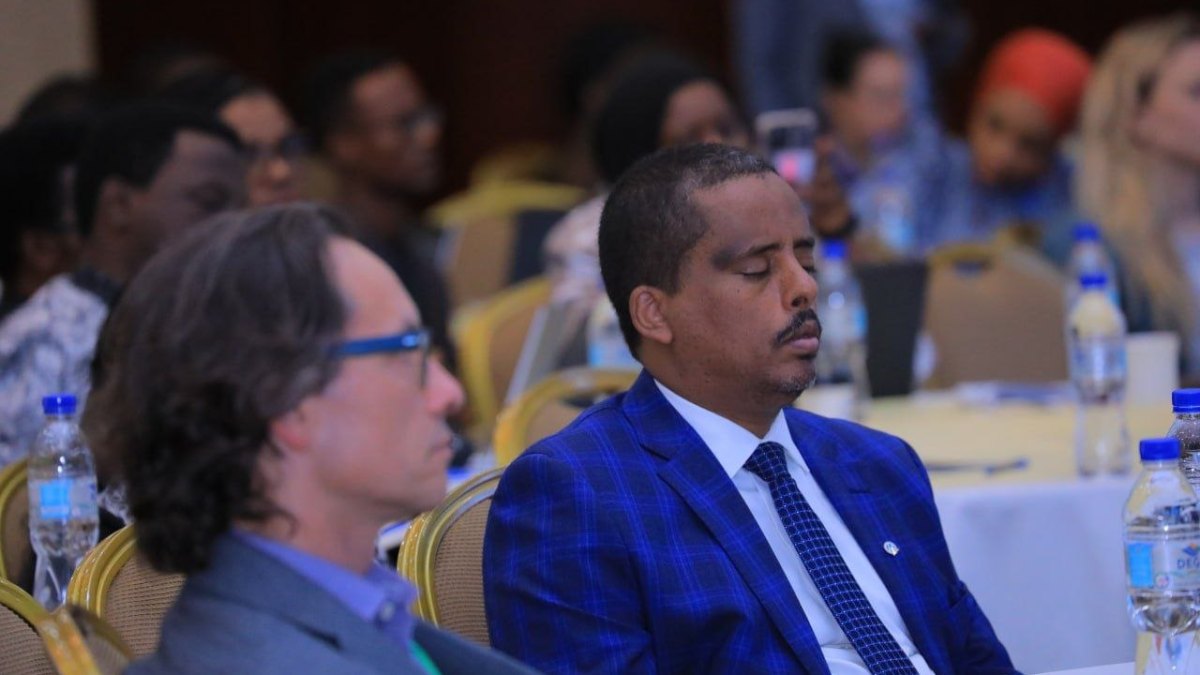
Following the technical presentations, participants engaged in an extensive consultative discussion on the future of childcare expansion in Ethiopia. The discussion was moderated by Dr. Balew and brought together all workshop participants.
Participants discussed key issues related to childcare infrastructure, sustainable financing, and the development of a national quality framework. They also examined how an expanded childcare system could contribute to women's economic empowerment, human capital development, and inclusive economic growth.
The consultation provided an opportunity for participants to reflect on the lessons emerging from Addis Ababa and consider how these could be adapted to different contexts across Ethiopia. Participants also discussed the importance of strengthening coordination among government institutions, development partners, private-sector actors, communities, and other stakeholders involved in childcare provision.
Particular attention was given to the need for sustainable financing mechanisms that could support the expansion and long-term delivery of quality childcare services. Participants also underscored the importance of establishing clear national standards to ensure that childcare services meet appropriate requirements for safety, quality, child development, and workforce conditions.
Throughout the consultation, participants emphasized that investment in childcare should not be viewed solely as a social service intervention but also as an important investment in human capital and economic development.
Quality and accessible childcare can enable parents, particularly women, to participate more actively in education, employment, entrepreneurship, and other economic activities. At the same time, quality early childhood care and development can contribute to children's cognitive, social, and emotional development and establish a stronger foundation for their future learning.
Participants therefore noted that a national childcare strategy should recognize childcare as an important component of Ethiopia's broader development agenda.
At the conclusion of the consultative discussion, H.E. Major General Ahmed Hamza, Deputy Director General of PSI, delivered the closing remarks. He expressed appreciation to the participants for their contributions and emphasized the importance of translating the evidence and recommendations generated through the consultation into practical policy and implementation measures.
He noted that continued collaboration among stakeholders would be essential for developing a national quality framework and sustainable financing system capable of supporting the expansion of childcare services across Ethiopia.
He underlined that Ethiopia’s present and future development ultimately depends on the quality, capacity, and well-being of its citizens. He noted that among all members of society, children constitute the foundation upon which the country’s future is built. The way children are cared for, protected, educated, and supported today will have a direct bearing on the social, economic, and human development of Ethiopia in the years to come.
He emphasized that investing in children is, therefore, not merely an investment in the future; it is an investment in both the present and the future of the country. Providing children with quality care, proper nutrition, protection, early learning opportunities, and a supportive environment enables them to develop their full potential and become healthy, productive, and responsible citizens.
He further stressed that investment in children generates benefits that extend beyond individual families. When children receive quality care and early developmental support, society as a whole benefit through improved human capital, stronger social cohesion, greater productivity, and better long-term economic outcomes. In this regard, he underscored the importance of treating childcare and early childhood development as key components of national development rather than as issues that concern families alone.
He also highlighted that strengthening childcare services can contribute to creating a more inclusive society by enabling parents, particularly women, to participate more fully in education, employment, entrepreneurship, and other economic activities. Thus, investment in quality childcare can simultaneously support child development, women's economic empowerment, household well-being, and national economic growth.
He concluded by emphasizing that the Ethiopia of tomorrow is being shaped by the children of today. Ensuring that every child has access to quality care, protection, development, and learning opportunities is therefore a shared responsibility of families, communities, government institutions, development partners, the private sector, and society at large. He called for sustained and coordinated investment in children as one of the most important foundations for building a prosperous, inclusive, resilient, and sustainable Ethiopia.
The workshop ultimately underscored the growing recognition that scaling up quality childcare is both a social investment and an economic imperative, with significant implications for women's economic empowerment, child development, human capital formation, and Ethiopia's pursuit of inclusive and sustainable growth.