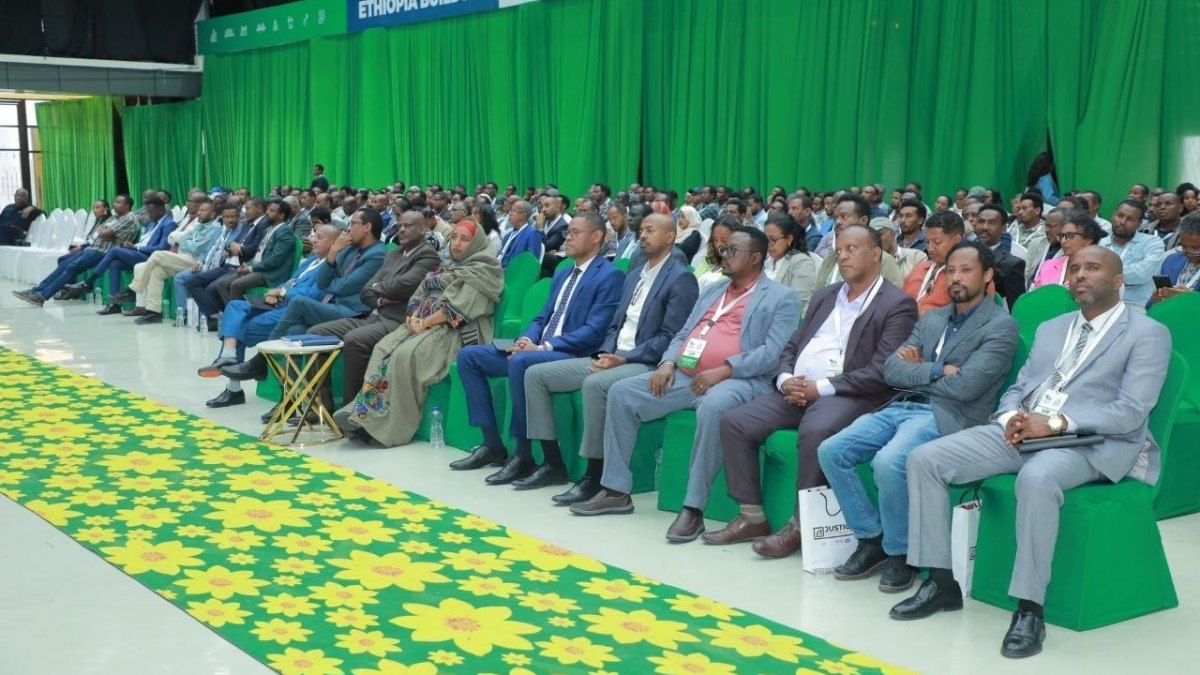
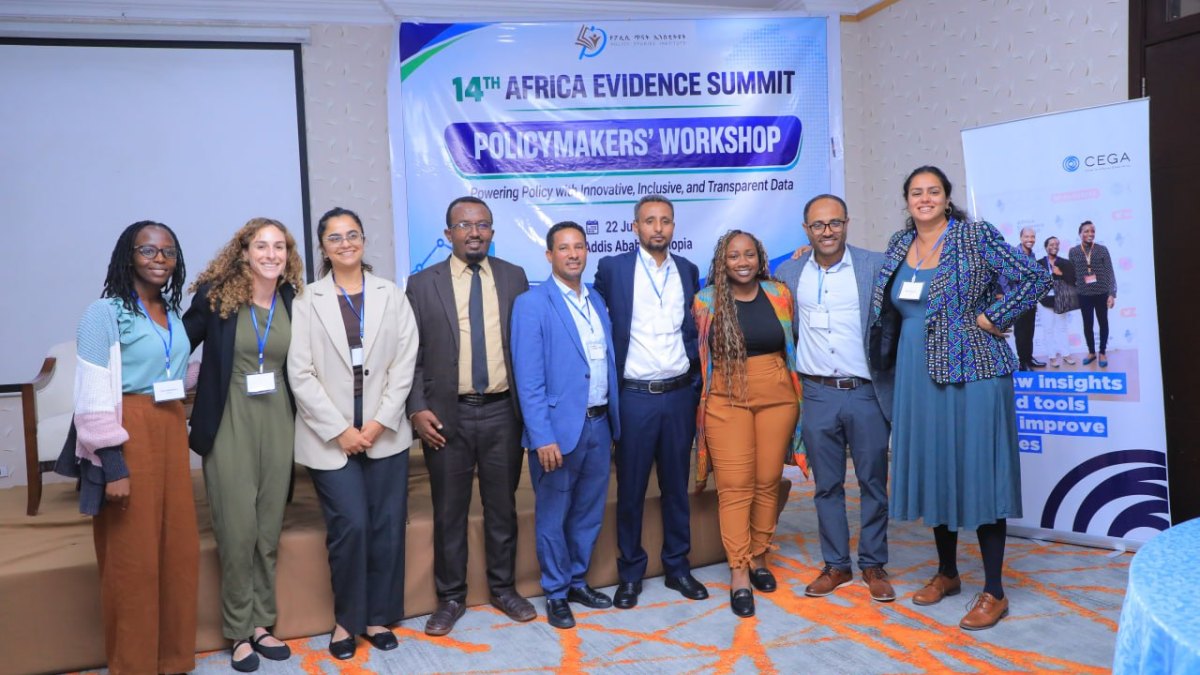
A study presented at the 2026 Africa Evidence Summit has examined how sustained contact between university students and host families can influence intergroup attitudes, social relationships and behaviour in Ethiopia.
Presenting the study, Solomon Zena, together with Tenaw Abate, Dereje Abegaz, Lingerh Akalu, Yohanes Ayele, Ruth Ditlmann, Habtamu Edjigu and Cecilia Mo, explained that the research investigated whether a host-family programme could help reduce ethnic prejudice and strengthen peaceful relations between communities.
The presentation, titled “Peace Begins at Home: The Effects of Host Families on Intergroup Dynamics in Ethiopia,” focused particularly on interactions between university students and host families in Gondar city.
Solomon said the study was motivated first by the changing dynamics of conflict in Ethiopia, including an increase in both the number of conflicts and conflict-related fatalities, as well as a growing share of violence directed against civilians.
He explained that the Ethiopian context was also characterized by widespread prejudice and animosity among ethnic groups. Referring to international assessments, he noted that Ethiopia had been ranked among the least peaceful countries globally and that recent conflicts had resulted in hundreds of thousands of deaths, extensive destruction and violations of rights.
The presentation also highlighted the scale of displacement, noting that approximately 5.1 million people had been displaced in 2021 alone.
Solomon explained that Ethiopia’s ethnic landscape was highly diverse, with more than 80 ethnic groups. He noted that the Amhara and Oromo together accounted for approximately 70% of the population, while many other groups had also experienced violence at different times.
According to the presentation, prejudice had been reinforced by historical memories of grievances between communities, the country’s ethnic-based federal structure and political manipulation.
The researchers also highlighted the role of misinformation and disinformation, particularly through social media, in reinforcing negative perceptions and deepening divisions among ethnic communities.
They explained that some ethnic groups had historically been portrayed as dominant while others were characterized as minorities, but that the dynamics had changed over time, with different groups becoming targets of violence.
The researchers argued that intergroup contact could provide an important pathway for peacebuilding.
They explained that high levels of conflict, prejudice and misinformation could reinforce one another in a vicious cycle. By contrast, sustained interaction between members of different groups could potentially create a virtuous cycle in which contact reduced prejudice, misinformation and conflict.
The presentation suggested that intergroup contact could allow people to share their culture and lifestyles, exchange emotions and feelings, and develop greater understanding of one another.
Against this background, the researchers examined a host-family programme that connected university students with families in Gondar city.
The presentation explained that the host-family programme had been fully implemented at the University of Gondar since 2018.
The programme created both physical and virtual connections between university students and host families in Gondar, while also facilitating connections between host families and the students’ own families.
According to the researchers, the programme connected students with host families and provided orientation on the programme, conflict-resolution approaches and available counselling services.
They argued that the sustained nature of these relationships provided an opportunity to examine whether regular and intimate contact between people from different ethnic backgrounds could influence attitudes and behaviour.
Solomon explained that the study sought to address several limitations in existing research on intergroup contact.
He noted that classic contact theory, associated with scholars such as Gordon Allport and later researchers, had provided important evidence that interaction between groups could reduce prejudice. However, much of the existing evidence had been correlational or laboratory-based, meaning that individuals could self-select into contact and make it difficult to establish causal effects.
The Ethiopian study addressed this limitation through randomization, with students being randomly invited to participate in the host-family programme. This approach reduced concerns about self-selection and allowed the researchers to estimate the causal effect of assignment to the programme.
The researchers also explained that many previous field experiments had tested relatively brief and low-intensity forms of contact, including workshops, games or single encounters.
By contrast, the Ethiopian study examined sustained, intimate, family-based contact and measured outcomes approximately four months and one year after the intervention.
The researchers further noted that many studies conducted in conflict settings relied primarily on self-reported attitudes, which could be affected by social-desirability bias or ceiling effects.
To address this concern, the study incorporated incentivized behavioural games involving real Amhara partners and real financial stakes, as well as implicit stereotype measures and an explicit check for social desirability.
The researchers also highlighted that much previous research had focused on majority-group attitudes toward lower-status minorities.
Their study expanded this scope by examining prejudice toward the Amhara, Ethiopia’s second-largest ethnic group, thereby exploring attitudes toward a group that did not fit the dominant pattern in much of the existing literature.
To assess the effects of the host-family programme, the researchers conducted a Randomized Controlled Trial (RCT) involving 739 students.
Of the study participants, 360 students were assigned to the treatment group, while 379 were assigned to the control group.
The researchers reported that 874 students were initially eligible for the baseline survey. From a larger population of 7,004 students who had been assigned to the University of Gondar between 2020 and 2024, those who were eligible and interested in participating formed the final study sample of 739 students.The research involved baseline, midline and endline data collection.
Preparatory work was conducted between June 2024 and January 2025. The connection period took place in February and March 2025, followed by the period of host-family contact in April and May 2025.
Midline data were collected around four months after the intervention, while endline data were collected approximately one year later, including information from both graduates and non-graduates.
The researchers assessed the effects of the programme across four major outcome domains over approximately one year.
The first domain focused on students’ self-reported attitudes.
The researchers measured participants’ feelings toward other ethnic groups using a 0–100 feeling thermometer. They also assessed social distance through five scenarios, using a 1–7 scale.
Additional measures included a resentment scale and interethnic trust, measured on a 1–5 scale.
The second domain examined actual intergroup contact.
Researchers measured students’ Amhara friendships, including whether their best friend was Amhara and the proportion of their friends who were Amhara.
At endline, they also measured participants’ incentivized willingness to pay to share a meal with an Amhara student.
The third domain examined implicit stereotypes.
The researchers used a “who says what” misattribution memory task to examine implicit associations. They also used a stereotype-content adjective task to measure perceptions related to warmth and competence.
The researchers explained that these measures were designed to capture attitudes that might not be fully reflected in direct self-reports.
Participants took part in dictator, trust and public-goods games. Importantly, these games were played with real Amhara partners and involved real stakes.
The researchers explained that this approach allowed them to examine whether the host-family programme influenced actual intergroup behaviour rather than relying solely on what participants said about their attitudes.
The researchers used an ANCOVA specification estimated through ordinary least squares (OLS) with robust standard errors to estimate the effects of the programme.
They explained that the main parameter of interest was the intention-to-treat (ITT) effect, representing the effect of being assigned to the host-family programme regardless of whether a participant ultimately took up the intervention.
They also estimated a treatment-on-the-treated (TOT) effect using two-stage least squares, with random assignment serving as an instrument for programme participation. The researchers reported a first-stage estimate of approximately 0.79.
All estimated effects were expressed in standard-deviation units based on the control group’s baseline distribution.
The researchers explained that baseline outcome measures were incorporated into the analysis to improve statistical precision.
They also used inverse-probability weighting to address non-random attrition and applied the Romano–Wolf correction to account for multiple hypothesis testing.
The study additionally examined whether the effects varied according to gender, ethnicity and admission cohort.
The researchers also investigated whether the intensity of contact influenced outcomes within the treatment group and whether students’ exposure to treated peers produced potential spillover effects.
Covariates included gender, ethnicity, year of study, the timing of data collection and baseline outcomes where available.
The presentation also reported monitoring evidence concerning the implementation of the programme.
A total of 347 students were matched with host families across four rounds between February and March 2025.
The researchers reported that 80% of matched families were interacting by the second monitoring round, an increase from 75% during the previous monitoring round.
They further reported that 90% of host families rated their relationship with the students as “good” or “very good.”
The researchers said these implementation findings suggested that the programme had achieved relatively high levels of participation and that most host families perceived their relationships with students positively.
The presentation concluded that the host-family programme provided a distinctive opportunity to examine whether sustained, family-based intergroup contact could influence prejudice, trust, social relationships and behaviour in a conflict-affected setting.
The researchers emphasized that the study differed from many previous interventions because it examined relatively intimate and sustained contact rather than short-term workshops or isolated encounters.
By combining randomized assignment with self-reported attitudes, measures of intergroup contact, implicit stereotype tests and incentivized behavioural games, the study sought to provide a broader and more rigorous assessment of how intergroup contact could affect relations between ethnic communities.
The researchers ultimately presented the host-family model as a potentially important approach to peacebuilding from the community level upward, suggesting that meaningful and sustained interpersonal relationships could provide an avenue for reducing prejudice and strengthening trust across ethnic lines in Ethiopia.
Host-Family Contact Increased Prosocial Behaviour but Did Not Shift Stated Ethnic Attitudes, Study Finds
Addis Ababa, 2026 Africa Evidence Summit — New findings from a randomized controlled trial in Ethiopia have shown that an intensive, family-based intergroup contact programme increased prosocial behaviour toward Amhara partners, although it did not produce detectable changes in participants’ self-reported attitudes, social distance, resentment or interethnic trust.
The findings were presented as part of the study titled “Peace Begins at Home: The Effects of Host Families on Intergroup Dynamics in Ethiopia.” The research involved 739 university students and followed participants for approximately one year.
Presenting the results, the researchers reported that the programme had no statistically detectable effect on self-reported attitudes.
They explained that intention-to-treat estimates for the feeling thermometer, social distance, resentment and interethnic trust were generally small, statistically insignificant and inconsistent in direction across different survey waves and analytical specifications.
The findings therefore suggested that participation in the host-family programme did not significantly alter how students explicitly reported their feelings toward other ethnic groups.
The researchers also found no clear treatment effect on several measures of intergroup contact, although they noted that contact with Amhara people increased among students in both the treatment and control groups.
For example, students’ willingness to pay to share a meal with an Amhara student was virtually identical between the two groups, at 74.08 compared with 74.10.
The study also found no robust treatment effect on Amhara friendships. Researchers explained that friendships increased across the sample, partly because students were already exposed to an Amhara-majority environment through their university and life in Gondar.
Consequently, the researchers argued that the control group did not represent a low-contact environment. Instead, students in both groups were already experiencing substantial intergroup contact, making it more difficult for the host-family intervention to generate additional measurable changes.
The study also found no treatment effect on implicit stereotype bias at endline.
The pre-registered stereotype-bias index produced a precise null result. However, treated students were found to misattribute more statements of all kinds to Amhara speakers.
The researchers interpreted this finding as evidence of greater salience of the Amhara ethnic category rather than increased prejudice toward Amhara people.
The most notable findings emerged from the incentivized behavioural experiments.
The researchers reported that prosocial behaviour toward Amhara partners increased among students who participated in the host-family programme, with effects becoming stronger with greater exposure to the intervention.
At endline, altruistic behaviour measured through the dictator game increased by approximately 0.17 standard deviations under the intention-to-treat analysis. The treatment-on-the-treated estimate was even larger, at approximately 0.22 standard deviations.
Trust-game transfers also increased by approximately 0.16 standard deviations under the ITT analysis and 0.20 standard deviations under the TOT analysis.
Cooperation in the public-goods game increased by approximately 0.09 standard deviations, although this result was positive but not statistically significant.
The researchers therefore emphasized an important distinction between what participants reported in surveys and what they were willing to do when real resources and decisions were involved.
An extended treatment-on-the-treated analysis examined the effects of actually participating in the host-family programme.
Using two-stage least squares and random assignment as an instrument for programme participation, the researchers estimated a first-stage relationship of approximately 0.79.
The analysis showed that actual participation increased altruism by approximately 0.22 standard deviations and trust-game transfers by approximately 0.20 standard deviations at endline, with both effects reaching statistical significance.
These results strengthened the researchers’ conclusion that the intervention had its clearest measurable impact on behavioural trust and prosociality toward specific members of another ethnic group.
The researchers also examined whether the programme had different effects across demographic groups.
They reported no systematic differences by sex. Although a reversal in trust-game outcomes among male participants was observed at midline, the difference had disappeared by endline.
Similarly, the study found no differential effects by ethnicity.
There was also no significant difference in treatment effects across student admission cohorts. However, the researchers noted that senior students were generally less prejudiced regardless of treatment status, leaving relatively little room for further improvement in a sample that contained a large proportion of senior students.
To complement the quantitative findings, the researchers conducted interviews with 25 students and four host families.
The interviews suggested that where placements worked particularly well, relationships developed into forms of genuine fictive kinship.
Students and host families reportedly began referring to one another using familial terms such as “our son” and “our daughter.”
The researchers found evidence of reciprocal material support, care during illness and invitations to family occasions.
They argued that these relationships helped explain why the strongest effects appeared in behavioural measures rather than in general attitude surveys.
According to the researchers, kinship was expressed through costly and concrete behaviour toward specific individuals, whereas the survey scales were already relatively favorable at baseline and therefore had limited room to detect additional change.
The qualitative research also identified several implementation constraints.
The researchers reported that transportation costs limited the frequency of visits between students and host families.
Host families also had limited opportunities to visit students on campus, reducing the extent to which the relationship could develop in both directions.
Furthermore, the level of family engagement varied substantially. Some relationships developed into deep forms of kinship, while others involved relatively limited engagement or neglect.
These differences suggested that the actual dose of contact received by participants varied considerably.
The researchers identified five factors that could explain why the programme produced behavioural effects but no significant changes in stated attitudes.
The Control Group Was Already Highly Exposed
First, they explained that the control group had already experienced substantial intergroup contact because all students were living and studying in an Amhara-majority environment, particularly on campus and in Gondar city.
Consequently, the control group was not a low-contact counterfactual.
Attitudes Were Already Near the Ceiling
Second, baseline attitudes were already relatively favorable, with scores ranging between approximately 5.7 and 6.4 on seven-point scales.
The researchers argued that this left limited statistical room for the intervention to produce measurable improvements.
The Sample Contained Many Senior Students
Third, the sample was relatively senior-heavy.
The researchers noted that senior students had generally experienced more time in the university and the surrounding community and therefore had already accumulated substantial intergroup exposure.
Spillovers Affected the Control Group
Fourth, the researchers identified spillover effects.
Students assigned to the control group were exposed to treated peers through their social networks. Such exposure may have increased prosocial behaviour among control students, thereby reducing the measured difference between the treatment and control groups.
The researchers suggested that these spillovers may have masked a genuine effect on trust.
The Delivered Dose Was Uneven
Finally, the researchers pointed to the diluted dose of the intervention.
Transportation costs, limited access to campus and variation in host-family engagement meant that not every participant experienced the same intensity of contact.
The researchers emphasized that all five factors would tend to push estimated treatment effects toward zero.
They also noted that the study had sufficient statistical power primarily to detect effects larger than approximately 0.2 standard deviations, meaning that the reported null findings should be interpreted as conservative estimates rather than definitive evidence that the intervention had no effect on attitudes.
The researchers situated their findings within the broader literature on intergroup contact.
They noted that classic meta-analyses, including the work of Pettigrew and Tropp (2006) and Lemmer and Wagner (2015), had generally concluded that intergroup contact could reduce prejudice.
However, they explained that their attitudinal null findings differed from this broader literature, although the Ethiopian context was distinctive because participants were already experiencing substantial ambient intergroup contact.
The findings were also said to be consistent with more recent field research questioning the strength of contact effects on generalized prejudice.
The researchers referred to Lowe (2024), which examined 41 preregistered studies and found no reliable evidence that contact consistently reduced prejudice, as well as Paluck et al. (2019), which found that field effects were generally weaker than effects observed in laboratory settings.
The Ethiopian findings were also compared with research from other conflict settings.
The researchers noted that Mousa (2020), studying soccer leagues in Iraq, found that contact changed behaviour toward known outgroup members without necessarily changing generalized attitudes.
Similarly, Scacco and Warren (2018) found in Nigeria that discrimination could decline even when explicit attitudes did not change.
The researchers argued that the Ethiopian results demonstrated a similar behaviour–attitude asymmetry, whereby intergroup contact appeared to affect concrete behaviour toward specific individuals before producing measurable changes in broad group-level attitudes.
The researchers also emphasized the importance of duration.
They cited Grady (2023), which found that sustained 18-month engagement in Nigeria improved attitudes, and Asimovic (2024), which found modest effects after three years in Israel for one side of the conflict.
Against this background, the Ethiopian researchers noted that the behavioural effects of their intervention were still increasing after one year, suggesting that longer-term follow-up could reveal additional effects.
In summarizing the study, the researchers described it as a relatively rare randomized evaluation of intensive, family-based intergroup contact in an active conflict setting.
The study involved 739 students and followed participants for approximately one year.
They reported three major findings.
First, the intervention produced no detectable effects on stated attitudes, general measures of intergroup contact or stereotype bias.
Second, it produced measurable increases in incentivized prosocial behaviour toward Amhara partners, with effects of approximately 0.16–0.17 standard deviations and evidence that these effects increased with greater exposure.
Third, the researchers argued that the absence of effects on attitudes should not automatically be interpreted as evidence that the programme failed.
Instead, the treatment and control groups were already exposed to substantial intergroup contact, attitudes were near the upper end of the measurement scales, spillovers affected control participants, the sample contained many senior students and the delivered intervention dose varied across families.
The researchers concluded that where intergroup contact is already widespread, the most measurable margin of change may be behavioural depth with specific members of another group, rather than broad attitudes toward the group as a whole.
They suggested that the frontier for intergroup contact interventions in divided societies may therefore lie less in changing what people say about outgroups and more in changing what they are willing to do with members of those groups.
The study has several implications for peacebuilding policy and programme design.
The researchers concluded that family-based contact programmes can deepen behavioural trust across ethnic lines, but cautioned that such programmes should not necessarily be expected to transform stated attitudes when people are already experiencing extensive interethnic contact.
They recommended several measures to increase the effectiveness of future interventions.
The researchers recommended covering transportation expenses because the cost of travel was identified as the most frequently cited barrier to regular visits.
They also recommended creating opportunities for two-way interaction, including enabling host families to visit students on campus.
Such arrangements could help deepen relationships and make contact more reciprocal.
The researchers recommended systematically monitoring the quality and frequency of host-family engagement because relationships varied from deep kinship to limited engagement.
Monitoring would allow programme managers to identify weak placements and provide additional support where necessary.
Finally, they recommended extending the programme to all interested students where feasible.
The researchers argued that broader access could increase the reach of the intervention while reducing possible resentment among students who were not selected for participation.
The study's central message was that peacebuilding may be strengthened not only by changing attitudes but also by creating meaningful relationships that translate into concrete acts of trust, cooperation and solidarity.
The host-family model demonstrated that even when broad measures of prejudice remain unchanged, sustained interpersonal relationships can influence how people behave toward members of another ethnic group.
The researchers therefore called for future interventions to focus on increasing the quality, intensity and duration of intergroup contact, while paying close attention to the practical conditions that determine whether such contact actually occurs.