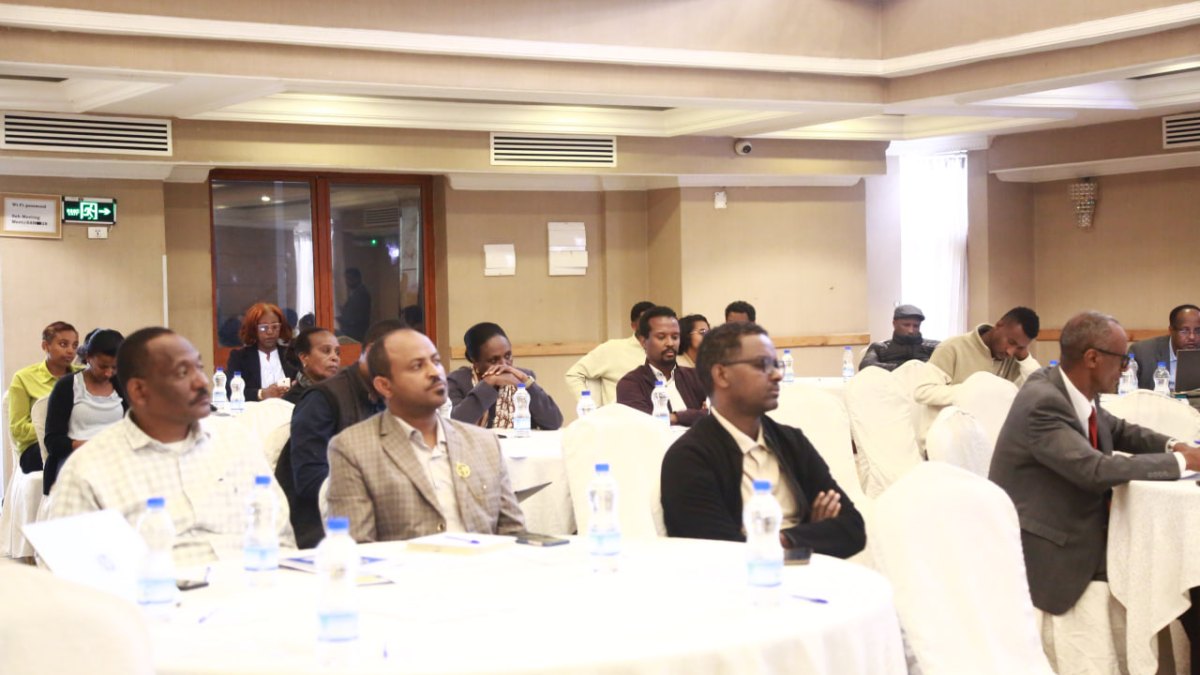
A distinguished delegation from Peking University visited the Policy Studies Institute to explore opportunities for strengthening academic, research, and institutional cooperation between the two institutions. The visit brought together senior academics, researchers, and experts from Peking University and PSI to exchange perspectives on Ethiopia–China relations, policy research, international communication, artificial intelligence, digital transformation, trade, culture, and the role of Chinese enterprises in Ethiopia. The visit also provided an important platform for discussing potential areas of joint research, knowledge exchange, capacity building, and long-term institutional collaboration between Ethiopia and China.
H.E. Major General Ahmed Hamza, Deputy Director General of the Policy Studies Institute, welcomed Prof. Wang Weijia, Dean of the Institute for International Communication at Peking University, and researchers from Peking University and Capital Normal University to the Policy Studies Institute on August 12, 2026.
H.E. Major General Ahmed conveyed that, on behalf of the Policy Studies Institute, it was a great pleasure and honor to welcome the distinguished delegation to the Institute. He expressed the Institute’s delight at receiving such a distinguished group from Peking University and its colleagues from Capital Normal University.
He noted that the delegation’s visit came at an important time when relations between Ethiopia and China continued to expand across a wide range of areas, including economic development, infrastructure, trade, investment, education, technology, culture, and people-to-people relations. He emphasized that PSI highly valued the opportunity to strengthen not only institutional relations between the organizations but also the broader intellectual and academic partnership between Ethiopia and China.
H.E. Major General Ahmed observed that Ethiopia and China had developed a long-standing relationship characterized by mutual respect, cooperation, and a shared interest in development. He noted that, over the past decades, China had become an important development and economic partner for Ethiopia, contributing to major infrastructure projects, industrial development, telecommunications, transport, energy, and human-capital development.
He emphasized, however, that the relationship between the two countries was much broader than economic cooperation. He stated that it was increasingly becoming a partnership based on knowledge, research, innovation, education, and policy learning.
He explained that this dimension was particularly important for the Policy Studies Institute. As Ethiopia’s leading public policy research and think-tank institution, PSI had a responsibility to generate credible evidence, provide policy advice, and contribute to national development debates. He therefore expressed the Institute’s belief that stronger engagement with leading Chinese universities and research institutions could add significant value to its research and policy work.
H.E. Major General Ahmed noted that China’s development experience offered important opportunities for research and comparative learning. At the same time, he emphasized that Ethiopia had its own development experiences, challenges, innovations, and lessons that could contribute to international knowledge. He therefore stressed that the relationship should not be approached simply as a transfer of knowledge from one country to another, but rather as a two-way exchange of ideas, evidence, experiences, and policy lessons. He stated that PSI saw significant opportunities to develop a sustained institutional partnership with Peking University.
First, he identified joint research as one of the potential pillars of cooperation. He explained that the two institutions could identify policy areas of common interest and establish joint research teams involving researchers from PSI and Peking University.
Second, he highlighted considerable potential for cooperation in international communication and public diplomacy. He noted that the Institute for International Communication and the School of Journalism and Communication at Peking University had considerable expertise in global communication, media, international narratives, and China’s engagement with the world.
Third, he proposed exploring comparative policy research between Ethiopia and China. He explained that comparative research could help both sides understand what works, under what conditions, and why. Fourth, he identified opportunities for capacity building and researcher exchange. He stated that PSI would welcome visiting scholars, joint seminars, doctoral exchanges, short-term research fellowships, and professional development programs.
Fifth, he proposed the possibility of establishing a regular Ethiopia–China Policy Dialogue involving PSI, Peking University, and potentially other universities and research institutions.
H.E. Major General Ahmed emphasized that PSI’s aspiration was not to limit the engagement to a courtesy visit or a one-time academic activity. Rather, he expressed the hope that the meeting would mark the beginning of a long-term institutional partnership.
He stated that PSI would be pleased to work with Peking University to identify priority areas, develop a joint work plan, and explore the possibility of formalizing cooperation through a Memorandum of Understanding or another appropriate institutional mechanism.
He further emphasized that cooperation should extend beyond Addis Ababa and Beijing. He noted that there was considerable potential to connect researchers, universities, think tanks, and policy institutions across Africa and China. He underscored that Ethiopia’s position as the headquarters of the African Union and a major diplomatic center provided a particularly important platform for such engagement.
In addressing the distinguished guests, H.E. Major General Ahmed stated that, for PSI, partnership with Peking University represented an opportunity to deepen its research capacity, broaden its international networks, and contribute to evidence-informed policymaking. He added that PSI hoped to serve as a valuable partner for Peking University in understanding Ethiopia’s policy environment, development priorities, and broader African perspectives.
He encouraged the participants to use the meeting as an opportunity to move from dialogue to action, from exchanging ideas to developing joint research, from individual contacts to institutional cooperation, and from short-term activities to a sustainable partnership.
H.E. Major General Ahmed reiterated his warm welcome to Prof. Wang Weijia and all members of the delegation to the Policy Studies Institute. He expressed the Institute’s appreciation for their visit, their interest in Ethiopia, and their willingness to explore areas of cooperation with PSI.
He concluded by expressing his expectation that the discussions would be productive and forward-looking and, most importantly, would contribute to building a lasting partnership between the Policy Studies Institute and Peking University in support of stronger Ethiopia–China relations and the sharing of knowledge for development. He thanked the delegation and once again welcomed them to the Policy Studies Institute.
Next, Dr. Netsanet Jote, Lead Researcher at the Policy Studies Institute, briefly presented to the distinguished delegation the historical development, institutional evolution, mandate, and major achievements of the Policy Studies Institute.
She explained that the Policy Studies Institute had a long institutional history 27 years ago rooted in Ethiopia’s efforts to strengthen evidence-based policymaking and establish a strong national capacity for research and policy analysis. She noted that the Institute had evolved in response to the country’s changing development priorities and policy needs.
She explained that the institutional history of PSI could be traced to earlier government-established research institutions that had played important roles in generating economic, social, and policy research in Ethiopia. These institutions had contributed to national development planning by conducting studies, producing policy analyses, generating socioeconomic data, and providing evidence to policymakers.
Dr. Netsanet further explained that the Policy Studies Institute had been re-established in 2018 through the merger of the Ethiopian Development Research Institute (EDRI) and the Policy Study and Research Center (PSRC). She noted that the merger had been intended to consolidate national research capacity, strengthen policy-oriented research, reduce institutional fragmentation, and create a stronger platform for generating evidence to support Ethiopia’s development policies and strategies.
According to her, the establishment of PSI had represented an important step toward strengthening the connection between research and policymaking. She explained that the Institute had been designed not merely as an academic research organization, but as a policy-oriented institution whose research was expected to respond to the country’s pressing economic, social, institutional, and development challenges.
She stated that, since its re-establishment, PSI had continued to expand its research activities and institutional capacity. She noted that the Institute had developed a broad research portfolio covering areas of national importance, including macroeconomic policy, trade and investment, agriculture, industrial development, poverty and inequality, education, health, social protection, governance, urban development, digital transformation, and other emerging policy issues.
Dr. Netsanet also highlighted the Institute’s role in providing evidence and policy advice to government institutions and other stakeholders. She explained that PSI had sought to bridge the gap between research and policy by producing policy studies, analytical reports, policy briefs, and other knowledge products that could inform national decision-making.
She further noted that PSI had established partnerships with universities, research institutions, international organizations, development partners, and think tanks both within Ethiopia and abroad. She explained that these partnerships had enabled the Institute to undertake collaborative research, strengthen researchers’ methodological capacity, facilitate knowledge exchange, and contribute to international policy and research networks.
In discussing the Institute’s organizational development, Dr. Netsanet explained that PSI had grown into a major public policy research institution with a broad institutional structure. She noted that the Institute had approximately 200 staff members, including a substantial number of researchers working across its different research centers and departments. She emphasized that this institutional capacity had enabled PSI to conduct multidisciplinary research on complex development issues.
She also emphasized the Institute’s commitment to strengthening the quality, relevance, and policy impact of its research. She explained that PSI had been working to improve research methodologies, data management, research communication, knowledge dissemination, and engagement with policymakers and other stakeholders.
She noted that PSI’s role had become increasingly important as Ethiopia faced complex and rapidly changing development challenges. These included economic transformation, demographic changes, urbanization, technological development, climate-related challenges, employment creation, education and human-capital development, and the need to strengthen inclusive and sustainable development.
Dr. Netsanet emphasized that the Institute had therefore sought to position itself as a bridge between knowledge generation and public policy. She explained that PSI aimed to ensure that policy decisions were increasingly informed by credible evidence while also ensuring that research responded to the practical needs and priorities of policymakers and society.
She also highlighted the Institute’s growing international orientation. She explained that PSI had increasingly engaged with international research institutions and think tanks to exchange experiences and learn from different development contexts. In this regard, she emphasized that cooperation with leading universities such as Peking University and Capital Normal University could provide important opportunities for joint research, comparative studies, researcher exchange, and institutional learning.
Dr. Netsanet concluded her presentation by emphasizing that the historical development of PSI demonstrated Ethiopia’s continued commitment to building a strong national policy research institution. She stated that the Institute had evolved from earlier research and policy organizations into a more comprehensive institution capable of undertaking multidisciplinary research and contributing to evidence-informed policymaking.
She expressed the Institute’s interest in building on this history by expanding its national, regional, and international partnerships. She particularly welcomed the opportunity to strengthen cooperation with the visiting delegation from Peking University and Capital Normal University and expressed the hope that the visit would lead to sustained institutional collaboration, joint research, knowledge exchange, and deeper academic and policy relations between Ethiopia and China.
Next, Prof. Wang Weijia, Dean of the Institute for International Communication at Peking University, delivered a detailed presentation to the Policy Studies Institute (PSI) researchers on the historical development of Peking University, the evolution of Ethiopia–China relations, the growing presence of Chinese enterprises in Ethiopia, the global expansion of artificial intelligence (AI) and digital technologies, and potential areas of collaboration between Peking University and PSI.
Prof. Wang began by providing an overview of the foundational history and institutional development of Peking University. He explained the university’s historical significance and its longstanding contribution to higher education, research, knowledge production, and intellectual development in China. He highlighted the university’s role as an important center of academic excellence and emphasized its growing engagement with international universities, research institutions, and policy organizations. He noted that Peking University had increasingly sought to strengthen international academic cooperation and promote exchanges of knowledge and expertise across countries and regions.
Prof. Wang then discussed the historical development of Ethiopia–China relations. He explained that the relationship between the two countries had developed over several decades and had gradually expanded from diplomatic engagement into broader cooperation in trade, investment, infrastructure, education, technology, culture, research, and people-to-people relations. He emphasized that the relationship had continued to evolve in response to changing global and regional circumstances and that both countries had developed significant interests in strengthening their economic and intellectual cooperation.
In this context, Prof. Wang highlighted the increasing role of Chinese enterprises operating in Ethiopia. He explained that Chinese companies had become important actors in Ethiopia’s economic and development landscape, particularly through their involvement in infrastructure, construction, manufacturing, telecommunications, energy, transportation, and other sectors. He noted that the activities of Chinese enterprises had created opportunities for economic cooperation, employment, technology transfer, skills development, and business-to-business relations. At the same time, he indicated that the growing presence of Chinese companies also created a need for deeper understanding of the social, cultural, economic, and policy dimensions of their engagement in Ethiopia.
Prof. Wang further drew attention to the rapid development of artificial intelligence and digital technologies across the globe. He explained that the world was experiencing a major technological transformation driven by AI, digital platforms, big data, automation, and other emerging technologies. He emphasized that these developments were changing the ways in which people communicated, conducted business, accessed information, conducted research, and interacted with governments and institutions.
He observed that the rapid expansion of AI presented both opportunities and challenges for developing countries, including Ethiopia. On the one hand, AI and digital technologies could support economic transformation, improve public services, strengthen education and research, enhance productivity, and facilitate access to information and knowledge. On the other hand, they also raised important questions related to digital inequality, data governance, privacy, misinformation, employment, technological dependency, and the need for appropriate policy and regulatory frameworks.
Prof. Wang emphasized the importance of strengthening cooperation between Ethiopia and China in the areas of digital transformation, artificial intelligence, research, innovation, and knowledge exchange. He suggested that universities, think tanks, research institutions, and policymakers could play an important role in examining the opportunities and challenges associated with these emerging technologies.
He also discussed possible areas of collaborative work between Peking University and PSI. He emphasized the potential for joint research, academic exchanges, policy studies, seminars, researcher mobility, and knowledge-sharing initiatives. He noted that collaboration could focus on areas of mutual interest and could bring together researchers and experts from different disciplines.
Prof. Wang indicated that comparative research between Ethiopia and China could provide valuable insights into development policies, economic transformation, digitalization, international communication, and other areas of common interest. He emphasized that such cooperation should be based on mutual learning and should provide opportunities for both sides to share experiences, research findings, and policy perspectives.
Following Prof. Wang’s presentation, PSI researchers and members of the visiting delegation engaged in an extensive discussion on a range of issues concerning China–Africa relations and Ethiopia–China cooperation.
The participants discussed the implications of tariffs and international trade policies for African economies and China–Africa economic relations. They exchanged views on how changes in global trade arrangements and tariff policies could affect trade flows, investment, industrial development, and the competitiveness of African economies.
Artificial intelligence and digital transformation also featured prominently in the discussion. Participants explored the opportunities AI presents for research, education, economic development, public administration, communication, and innovation. They also discussed challenges associated with the rapid adoption of AI, including governance, regulation, digital skills, data protection, misinformation, and unequal access to technology.
The discussion also addressed the role of culture in strengthening Ethiopia–China and broader China–Africa relations. Participants emphasized that cultural understanding and people-to-people exchanges were essential for strengthening long-term relationships between countries. They discussed the potential contribution of universities, cultural institutions, researchers, media organizations, and creative industries to promoting mutual understanding and strengthening cultural exchange.
Trade and economic cooperation were also discussed extensively. PSI researchers and members of the delegation exchanged views on Ethiopia’s trade relations with China, investment opportunities, industrial development, and the role of economic partnerships in supporting development. Participants emphasized the importance of creating stronger connections between research, business, and policymaking so that evidence could inform strategies for improving trade and investment relations.
The participants also discussed the role of media and international communication in shaping perceptions of China–Africa relations. They noted that media organizations played an important role in communicating information about economic cooperation, development projects, cultural exchanges, and diplomatic relations. The discussion highlighted the importance of strengthening professional communication, improving mutual understanding, and promoting balanced and evidence-based narratives about Ethiopia–China and China–Africa relations.
Another major area of discussion was the role and activities of Chinese enterprises in Ethiopia. Participants considered both the economic contributions and the broader implications of Chinese investment and business activities. They discussed issues related to employment, technology transfer, local capacity building, industrial development, corporate engagement, and relations between Chinese companies and Ethiopian communities and institutions.
The discussions provided an opportunity for PSI researchers and the visiting delegation to exchange perspectives on the opportunities and challenges associated with the expanding Ethiopia–China relationship. Participants emphasized the importance of continued dialogue, research collaboration, and knowledge exchange better to understand the changing dynamics of China–Africa relations.
The meeting concluded with a shared understanding that stronger institutional cooperation between PSI and Peking University could provide an important platform for examining these issues through research and evidence-based policy analysis. Both sides expressed interest in continuing discussions and exploring practical areas of collaboration, particularly in research, international communication, artificial intelligence, digital transformation, trade, culture, and Ethiopia–China relations.