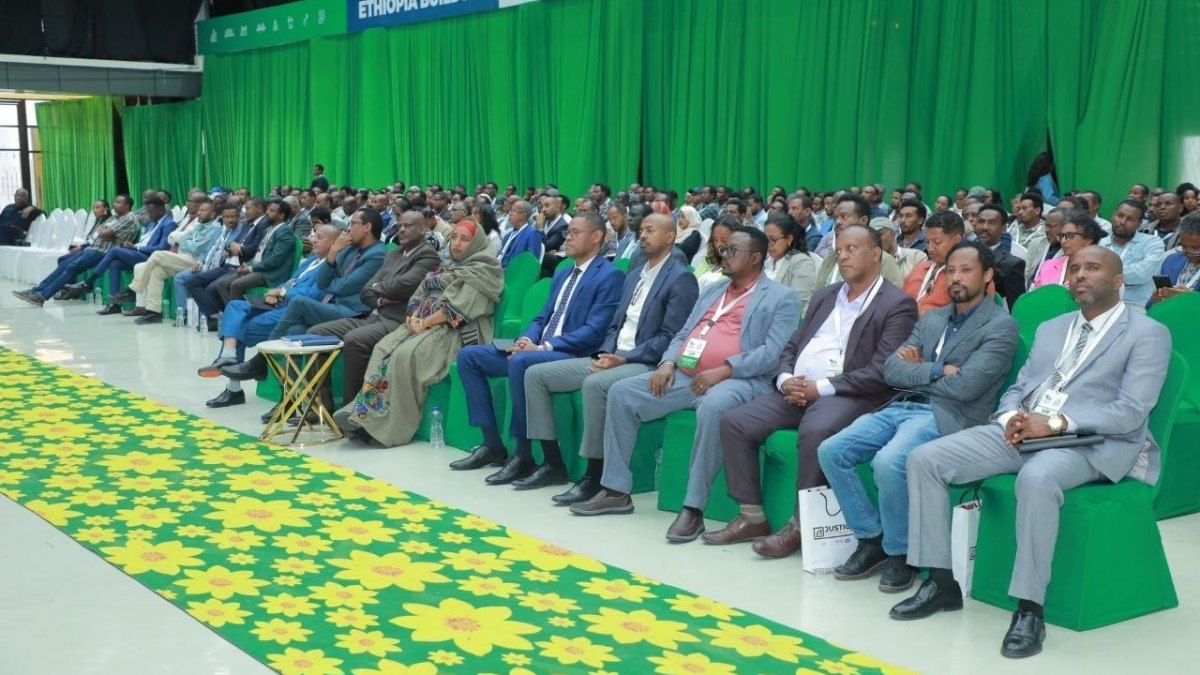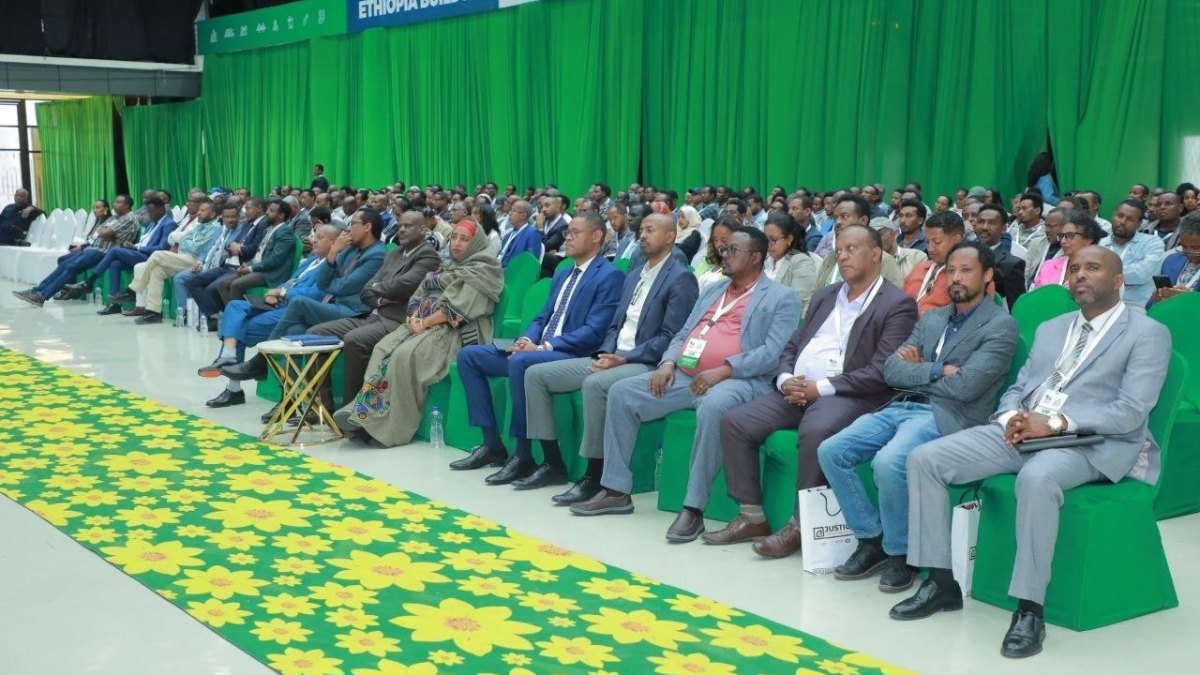

Kamal Yakubu and Daniel Iberi presented a session entitled “Unlocking Afrobarometer Data: Tools and Applications for Evidence-Based Decision Making,” in which they highlighted key findings from the 2024/2025 Afrobarometer survey and explained the importance of public opinion data for evidence-based policymaking.
At the beginning of the presentation, the presenters engaged participants in a short “pop quiz.” They asked participants to identify, in one word, what they considered to be the most important problems facing their country that the government should address. They explained that this question was also central to Afrobarometer surveys because it provides an opportunity to understand citizens’ perceptions of the issues they consider most urgent.
The presenters then provided an example from Mauritania’s 2023 Afrobarometer survey. They explained that respondents had been asked what they considered to be the most important problems facing their country that the government should address. Respondents were allowed to provide up to three responses. The presenters noted that the findings demonstrated important differences across age groups. Among Mauritanians aged 18–35, education was identified as the most important problem, whereas among those aged 56 years and above, poverty and destitution were regarded as the most important concerns. They emphasized that such differences demonstrated the importance of disaggregating public opinion data by demographic characteristics when developing and evaluating public policies.
The presenters further explained that public opinion data was much more than a snapshot of what people thought at a particular point in time. According to them, data collected through Afrobarometer provided a powerful mechanism for hearing directly from citizens and offered a unique window into their concerns, needs, and aspirations. They noted that such data could help researchers and policymakers understand what kept citizens concerned, what essential services or opportunities were missing from their lives, and what they aspired to achieve for themselves and their communities.
They emphasized that public opinion research was an important pillar of democratic governance. They explained that listening to citizens could help capture their priorities and concerns, strengthen policy debates, and promote transparency and accountability. They therefore underscored the importance of systematically collecting and analyzing citizens’ views and incorporating those views into policy and decision-making processes.
The presenters explained that Afrobarometer was a pan-African, non-partisan survey research network that provided reliable data on African citizens’ experiences and evaluations of democracy, governance, and quality of life. They stated that one of Afrobarometer’s principal goals was to give African citizens a voice in policy and decision-making.
They reported that Afrobarometer had conducted ten survey rounds in up to 45 African countries since 1999. By the end of August 2025, they indicated that the organization had conducted nearly 300 surveys involving more than 440,000 respondents across 45 African countries. These extensive datasets, they explained, provided researchers and policymakers with valuable opportunities to examine public attitudes and experiences across countries and over time.
The presenters also emphasized that the strength of Afrobarometer lay in its ability to generate comparable evidence across different African contexts. They explained that the standardized approach used by the network enabled researchers to identify trends, compare countries, and examine changes in citizens’ views over time.
Regarding methodology, the presenters explained that Afrobarometer surveys were based on nationally representative samples of adult citizens aged 18 years and above. They noted that interviews were conducted face-to-face and that respondents were given the opportunity to participate in the language of their choice.
They further explained that Afrobarometer used a standardized questionnaire, which allowed researchers to make meaningful comparisons across countries and survey rounds. According to the presenters, the standardization of the questionnaire was particularly important because it enabled researchers to track changes in public opinion over time while also comparing citizens’ experiences across different countries.
The presenters indicated that Afrobarometer generally used sample sizes of 1,200 or 2,400 respondents for country-level surveys. They explained that these sample sizes produced margins of sampling error of approximately plus or minus two or three percentage points, respectively. They noted that this methodology contributed to the reliability and usefulness of the data for research and policy analysis.
The presenters also discussed the process through which Afrobarometer developed its survey questionnaires. They explained that the organization received suggestions from interested stakeholders on a rolling basis. Stakeholders who wished to suggest questions or topics for inclusion in the questionnaire could submit their proposals through the designated Afrobarometer contacts.
They indicated that a questionnaire committee met at the beginning of each survey round to review the submissions received from stakeholders. The committee then considered which new topics should be included in the questionnaire and which existing topics might be dropped.
The presenters emphasized that this process allowed Afrobarometer to remain responsive to emerging policy issues and the information needs of researchers, policymakers, and other stakeholders. They encouraged interested institutions and researchers to contribute suggestions for future survey rounds so that the questionnaire could continue to address important and emerging issues across African societies.
Overall, Kamal Yakubu and Daniel Iberi demonstrated that Afrobarometer data provided an important resource for understanding African citizens’ experiences, priorities, perceptions, and aspirations. They emphasized that when systematically analyzed and appropriately applied, public opinion data could contribute significantly to evidence-based decision-making, stronger policy debates, democratic governance, transparency, and accountability.
The presentation continued with an explanation of the Afrobarometer questionnaire structure, the use of Afrobarometer data in research, and a case study examining factors associated with protest participation in Kenya.
The presenters explained that the Afrobarometer questionnaire consisted of three main components. The first component was the core survey topics, which were asked in all participating countries and tracked consistently over time. The second component comprised special module questions, which addressed issues that were particularly relevant at a specific period. They gave the COVID-19 module as an example of a special module developed to capture citizens’ experiences and perceptions during the pandemic. The third component consisted of country-specific questions, which focused on topical issues of particular relevance to an individual country and were therefore asked only in that country.
They noted that the complete questionnaire generally took approximately 45 minutes to one hour to administer and contained more than 100 questions.
The presenters explained that Afrobarometer tracked a broad range of issues over time, allowing researchers to examine changes in public attitudes and perceptions. These core topics included the economy, democracy, elections, trust in government, corruption, ethnicity and identity, poverty, political participation, infrastructure, tolerance and inclusion, media, and social services.
They further noted that the new modules introduced in Round 11 expanded the scope of the survey to include issues such as international relations, democratic resilience, populism, taxation, social and economic inclusion, climate change, and gender. They explained that these additions reflected emerging issues of importance to African societies and policymakers.
The presenters emphasized that Afrobarometer public opinion data was an important resource for academic teaching and scholarly research across a wide range of disciplines. They explained that researchers in fields such as political science, international relations, development studies, economics, public health, security studies, and sociology could use Afrobarometer data to investigate important social, political, and economic questions.
They stated that the data provided systematic evidence on citizens’ attitudes, perceptions, and lived experiences across African countries. According to the presenters, the availability of standardized data allowed researchers to move beyond anecdotal evidence and examine social and political phenomena using empirical evidence.
They identified several key areas in which Afrobarometer data could be applied. These included evidence-based teaching, bridging theory and practice, supporting data literacy and critical research skills, enhancing academic research and writing, strengthening qualitative research, conducting comparative and cross-country analysis, assessing long-term changes in public perceptions through time-series analysis, and informing policy-relevant scholarship.
The presenters therefore encouraged researchers and educators to view Afrobarometer not simply as a source of statistics but as a resource that could strengthen both research methodology and evidence-based policy analysis.
The presenters also introduced the Afrobarometer Online Data Analysis Tool, explaining that it provided researchers with an accessible means of exploring and analyzing survey data. They highlighted the usefulness of such tools in enabling researchers to examine relationships between different variables and generate evidence that could inform academic and policy discussions.
As a practical illustration of how Afrobarometer data could be used, the presenters introduced a case study entitled “Predicting Protest Participation: Insights from the Year Before Kenya’s 2024 Anti-Tax Demonstrations.”
They explained that the study used Afrobarometer Round 10 (2024) survey data and applied binomial logistic regression to identify factors associated with participation in demonstrations or protest marches in Kenya.
The presenters emphasized that the fieldwork had been conducted in April and May 2024, before the nationwide protests that took place in June and July 2024. They clarified that the dependent variable measured respondents’ self-reported participation in a demonstration or protest march during the previous 12 months, rather than participation in a particular protest event.
They further explained that the reference period overlapped with the implementation of Kenya’s 2023 Finance Act, a period during which tax increases and rising living costs were already affecting citizens. However, they cautioned that the analysis identified associations rather than causal relationships. Therefore, the findings should be interpreted as a snapshot of public opinion and protest behaviour immediately preceding the 2024 demonstrations rather than as proof of what directly caused the protests.
The presenters explained that the regression model incorporated several categories of variables.
The dependent variable was protest participation, measured by whether respondents had participated in a demonstration or protest march during the previous year.
The demographic variables included age, gender, urban or rural residence, and employment status.
The political engagement variables included political posting on social media, internet use, smartphone ownership, and partisanship, particularly affiliation with the United Democratic Alliance (UDA) compared with other political affiliations.
The economic perception variables included respondents’ personal living conditions, their assessment of the country's current economic condition, their expectations regarding economic conditions during the following 12 months, their views on whether rising living costs resulted from poor economic management, and their scores on the Lived Poverty Index.
The political attitude variables included trust in political institutions, satisfaction with national government performance, satisfaction with county government service delivery, and perceptions of the overall direction in which the country was heading.
The presenters then examined patterns of protest participation across 38 countries covered by the 2024/2025 Afrobarometer survey. Respondents had been asked whether, during the previous year, they had participated in a demonstration or protest march. Those who reported participating “once or twice,” “several times,” or “often” were classified as having participated.
For Kenya, the presenters examined protest participation according to demographic characteristics, frequency of political or community-related posting on social media, and employment status.
They explained that these comparisons provided an initial picture of which groups were more or less likely to report participation in demonstrations and provided a basis for the subsequent regression analysis.
The presenters reported that several factors were significantly associated with a greater likelihood of protest participation.
They explained that respondents who posted about politics on social media were approximately 1.90 times more likely to participate in protests. Urban residents were approximately 1.85 times more likely to participate, while men had approximately 1.73 times higher odds of participating than women.
They further reported that higher levels of lived poverty were associated with a 1.48-fold increase in the odds of protest participation. Interestingly, respondents reporting better personal living conditions also had higher odds of participating, with an odds ratio of approximately 1.26.
The presenters also identified factors associated with a lower likelihood of participation. They explained that the likelihood of participating declined with age, meaning younger respondents were more likely to participate. They also found that respondents who were not employed and not looking for work had approximately 74% lower odds of participating compared with full-time workers.
At the same time, several variables were found not to be statistically significant predictors of protest participation after controlling for other factors. These included trust in political institutions, satisfaction with government performance, county government performance, partisanship, internet use, smartphone ownership, and national economic evaluations.
In interpreting the findings, the presenters explained that digital political engagement appeared to be particularly important. They noted that posting about politics on social media was associated with nearly twice the likelihood of participating in protests, suggesting that online political engagement could play an important role in mobilizing citizens for offline collective action.
They also explained that young people and urban residents were more likely to participate in demonstrations, indicating that demographic and geographical factors were important in understanding protest mobilisation.
The presenters further observed that men were more likely than women to participate in demonstrations, as the analysis showed substantially higher odds of protest participation among male respondents.
Regarding economic conditions, they explained that economic hardship mattered, but it was not the only factor. Individuals experiencing higher levels of lived poverty were more likely to participate, but people with relatively better personal living conditions also showed a higher likelihood of participation. The presenters suggested that this pattern could indicate that protest participation was influenced by both grievance and the capacity to mobilize.
Finally, they emphasized that long-standing dissatisfaction alone was not sufficient to explain protest participation. Trust in political institutions, satisfaction with government performance, political partisanship, and perceptions of the national economy did not independently predict participation once other factors were taken into account.
The presenters concluded that the case study demonstrated the practical value of Afrobarometer data for investigating complex social and political phenomena. They showed that publicly available survey data, combined with appropriate statistical methods, could help researchers identify patterns of political behaviour, test relationships between different factors, and generate policy-relevant evidence about citizen engagement and social mobilisation.
The presenters then introduced a second case study entitled “Pressure Points: Africa’s Health Systems Amid Global Aid Contraction.” They explained that the case study used Afrobarometer data to examine citizens’ perceptions of health services, access to healthcare, challenges encountered in public health facilities, medical-aid coverage, and assessments of government performance in improving basic health services.
The presenters first examined health as one of the major policy priorities identified by citizens across 38 African countries in the 2024/2025 Afrobarometer survey. They explained that respondents had been asked to identify the most important problems facing their country that the government should address, with each respondent allowed to identify up to three priorities.
They noted that the health category included responses relating to illness and sickness, HIV/AIDS, and COVID-19. The findings demonstrated that health remained an important concern for citizens across many African countries and therefore represented an area in which governments needed to pay particular attention to public expectations and service delivery.
The presenters then discussed citizens’ attitudes toward government responsibility for healthcare. Respondents had been asked whether they agreed or disagreed with the statement that the government should ensure that all citizens had access to adequate healthcare, even if doing so required an increase in taxes.
They explained that the findings provided important insights into citizens’ willingness to accept higher taxation in exchange for improved healthcare services. The results suggested that African citizens could be willing to pay more in taxes if they believed that additional resources would contribute to better and more accessible basic health services.
According to the presenters, this finding had important implications for discussions about domestic resource mobilization and sustainable financing of health systems, particularly at a time when many African countries were facing reductions or uncertainties in external development assistance.
The presenters next examined citizens’ experiences with public healthcare facilities. Respondents had been asked whether they had visited or had contact with a public clinic or hospital during the previous 12 months.
They explained that examining contact with public health facilities by demographic characteristics allowed researchers to identify which population groups were more likely to rely on public healthcare services. Such information, they noted, could help policymakers better understand patterns of healthcare utilization and identify groups that might face particular barriers to accessing services.
Among respondents who had contacted a public clinic or hospital during the previous year, the presenters explained that they had been asked how easy or difficult it had been to obtain the medical care or services they needed.
They noted that respondents who had not contacted a public clinic or hospital were excluded from this particular analysis. This approach enabled the researchers to focus specifically on the experiences of people who had actually interacted with public healthcare facilities.
The presenters explained that the results provided an important measure of accessibility and responsiveness of public health services, since simply having a health facility available did not necessarily mean that citizens could easily obtain the services they required.
The presenters then examined the specific problems citizens had encountered when accessing public health facilities. Respondents who had contacted a public clinic or hospital were asked whether they had experienced several problems during the previous 12 months.
These problems included:
Lack of medicines or other medical supplies;
Absence of doctors or other medical personnel;
Long waiting times;
Poor physical condition of health facilities; and
High costs that prevented people from obtaining the care or medicines they needed.
The presenters explained that respondents who reported experiencing these problems “once or twice,” “a few times,” or “often” were included in the relevant measures.
They emphasized that these findings provided valuable information about the quality and reliability of public health service delivery from the perspective of citizens who had directly used those services.
The presenters specifically highlighted the problem of medicine and medical-supply shortages. They explained that respondents who had used public health facilities were asked whether they had encountered a lack of medicines or other supplies during the previous year.
They noted that this indicator was particularly important because the availability of medicines and basic supplies was a fundamental component of effective healthcare delivery. Frequent shortages could reduce public confidence in health facilities and could also result in additional financial burdens for patients who might have to purchase medicines elsewhere.
The presenters also discussed long waiting times as another important challenge facing public healthcare systems.
They explained that respondents who had contacted public clinics or hospitals were asked whether they had experienced long waiting times. Those reporting that they had encountered this problem once or twice, a few times, or often were included in the analysis.
They noted that prolonged waiting times could indicate pressures on health facilities, including insufficient staffing, high patient volumes, inefficient administrative procedures, or inadequate infrastructure. Consequently, the indicator could be useful for policymakers seeking to understand citizens’ actual experiences with healthcare services.
The presenters then turned to medical-aid or health-insurance coverage. Respondents in 36 countries were asked whether they had any form of medical-aid coverage that helped pay their medical bills when they became sick.
They explained that the findings indicated that the concept of medical aid or health insurance remained relatively new or unfamiliar in many parts of Africa. This suggested that large sections of the population continued to rely on direct payment or other informal mechanisms to meet healthcare costs.
The presenters further explained that respondents who reported having no medical-aid coverage were asked to identify the main reason for not having such coverage. This allowed researchers to explore the barriers preventing people from participating in health-insurance or medical-aid schemes.
They emphasized that understanding these barriers was important for policymakers because expanding health insurance coverage would require more than simply establishing insurance programs. It would also require addressing issues such as affordability, awareness, accessibility, and citizens’ perceptions of the value of insurance.
The presenters finally examined citizens’ assessments of government performance in improving basic health services. Respondents were asked how well or badly they believed the current government was handling the issue of improving basic health services, with an option for those who had not heard enough to provide an assessment.
They explained that this indicator provided an important link between service delivery and public perceptions of government performance. Citizens’ experiences with healthcare facilities could influence their assessment of whether governments were effectively fulfilling their responsibilities in the health sector.
In concluding the case study, the presenters emphasized that public opinion data had an important role to play in policymaking, particularly in relation to public service delivery.
They highlighted three major conclusions from the Afrobarometer evidence.
First, they explained that health was an important concern for the average African citizen. This demonstrated that healthcare should remain a significant priority in national policy and development planning.
Second, they noted that African citizens might be willing to accept higher taxes if this resulted in better basic health services. They suggested that this finding could be relevant to ongoing discussions about domestic financing of health systems and reducing dependence on external assistance.
Third, they observed that the idea of medical aid or health insurance remained relatively novel in many parts of Africa. This indicated a need for greater public awareness, stronger insurance systems, and policies that could expand affordable financial protection against healthcare costs.
Overall, the presenters used the case study to demonstrate how Afrobarometer data could move beyond measuring general public opinion and provide practical evidence about citizens’ experiences with essential public services. They showed that such evidence could help policymakers identify pressure points in health systems, understand citizens’ expectations, assess the quality of service delivery, and design more responsive and sustainable health policies.