News
Class Size and Learning | PSI | 16 Aug 2026
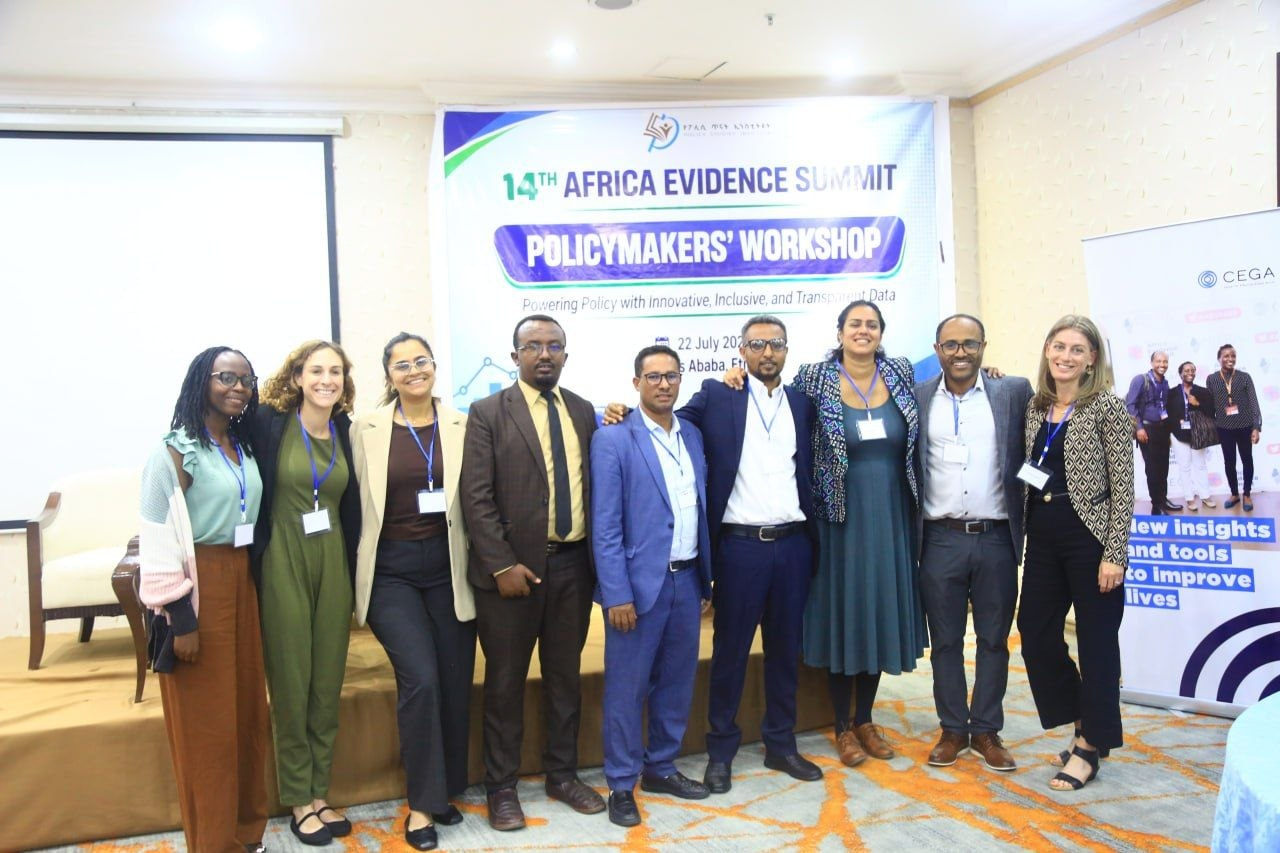
At the 14th Africa Evidence Summit held July 23–24, 2026, Nneka Esther Osadolor of the African Economic Policy Forum presented "Does Class Size Matter for Learning? For Whom and How? Evidence from Public Primary Schools in Rwanda," examining whether reducing class sizes improves learning in a context where Rwanda's public primary schools had a pupil-classroom ratio of about 60 and a pupil-teacher ratio of about 48 in 2023/24, with roughly 80% of lower-primary pupils below expected reading levels. Exploiting the 69-pupil enrolment threshold introduced under the RwandaEQUIP reform—which increased the probability of schools creating at least two streams by about 49 percentage points—the study used a fuzzy regression discontinuity design with two-stage least squares across 761 public primary schools and approximately 4,471 school-by-grade observations, drawing on Foundational Literacy and Numeracy assessments and Term 1 and Term 3 exam scores in English, Kinyarwanda, Mathematics, Science and Elementary Technology (SET), and Social and Religious Studies (SRS). Reducing class size by roughly 16 pupils per stream (from about 52 to 36) produced significant short-term gains—approximately 0.23 standard deviations in English, 0.22 in SET, 0.20 in SRS, and a marginally significant 0.13 in Kinyarwanda, with near-zero effects in Mathematics—but these effects largely faded by Term 3 (English and SET falling to about 0.04, SRS to 0.02), suggesting smaller classes alone cannot sustain learning gains without complementary teacher support. Effects were concentrated in Grades 1–3 (English up to 0.35 SD, Kinyarwanda about 0.37 SD, SET up to 0.60 SD, and more likely to persist) versus weaker and sometimes negative effects in Grades 4–6, and were strong in single-shift schools but near zero in double-shift schools, where increased teacher workload may offset benefits. The study found a non-linear relationship, with outcomes suffering above 45 pupils per stream, largest gains when classes reached 40–45 pupils, and diminishing returns below about 35, leading Osadolor to recommend prioritizing Grades 1–3, adopting 40–45 pupils per stream as a practical benchmark, accelerating the transition to single-shift schooling, combining class-size reduction with structured lesson guides, coaching and continuous professional development, and avoiding blanket reductions across all grades—concluding that class size does matter, but its impact depends critically on where, when, and how reductions are implemented, and that policymakers should pursue optimal rather than minimal class sizes to maximize learning gains within fiscal and institutional constraints.
Research Data
PSI Research Data Repository | 2026_Policy Studies Institute Policy Day | Amare Matebu (PhD), Netsanet Jote (PhD), Dereje Rahmet (Msc), Sisay Sintayehu (Msc) | 2026_Policy Studies Institute Policy Day | 11 May 2026
Fast growth of working age population with limited employment opportunity: The population is growing fast at 3.02% per year and estimated to exceed 144 million in 2030 (ILOSTAT, 2019). Moreover, the labor force is growing much more rapidly than the population...
Research Data
PSI Research Data Repository | 2026_Policy Studies Institute Policy Day | Dong-joo Joo, Jooyoung Yang, Eunsong Lee, Amare Matebu, Netsanet Jote, Dereje Rahmet, Sisay Sintayehu, Sirack Kassahun | 2026_Policy Studies Institute Policy Day | 10 May 2026
This study explores how to promote bilateral industrial coopera tion between Korea and Ethiopia centered on bilateral trade and investment. This research focuses particularly on industrial cooper ation between the Small & Medium Enterprises (SMEs) of the two c...
Research Data
PSI Research Data Repository | 2026_Policy Studies Institute Policy Day | Alebel B. Weldesilassie, Tadese Kuma, Mekonen Bekele, Tigabu Getahun, Seid Yimam, Abenezer Wondeson, Fisseha Asmare | 2026_Policy Studies Institute Policy Day | 10 May 2026
Dawdling growth in farm productivity caused by slow technological progress, inadequate irrigation infrastructure, weak market functioning and recurrent drought are among the major challenges. Inadequate participation of stakeholders in value chain development...
Research Data
PSI Research Data Repository | 2026_Policy Studies Institute Policy Day | Amare Matebu Kassa (Ph.D), Netsanet Jote Tollosa (Ph.D), Sisay Sintayehu Gebre (Msc), Zemene Yohannes (Msc) | 2026_Policy Studies Institute Policy Day | 10 May 2026
In many countries including Ethiopia, one of the key elements of development strategies is to support young people to acquire professional skills through Technical and Vocational Education and Training (TVET) programs. TVET systems are essential for addressing...
Research Data
PSI Research Data Repository | 2026_Policy Studies Institute Policy Day | AMARE MATEBU KASSA (Ph.D), Ahmednur Yusuf Hassen (MA), Dereje Rahmet Tesafa (Msc), Sisay Sintayehu Gebre (Msc) | 2026_Policy Studies Institute Policy Day | 10 May 2026
Foreign Direct Investment (FDI) is the pathway to global value chains and has the potential to drive economic growth and diversification in least developed and developing countries. FDI inflows can serve as a catalyst for industrialization and structural trans...
Research Data
PSI Research Data Repository | 2026_Policy Studies Institute Policy Day | Amare Matebu (Ph.D), Solomon Tilahun (Msc), Wubalem Seraw (Ph.D), Netsanet Jote (Ph.D) | 2026_Policy Studies Institute Policy Day | 10 May 2026
Ethiopia’s ambition to transition from an agrarian to an industrial economy is central to its economic transformation agenda. This vision is reflected in the country’s industrial development strategies, Growth and Transformation Plans (GTPs), and sector-specif...
Research Data
PSI Research Data Repository | Industry and Mining Department | Amare Matebu, Solomon Tilahun, Wubalem Seraw, Netsanet Jote | Industry and Mining Department | 05 Dec 2025
This study aims to evaluate the effectiveness of existing manufacturing incentive programs, identify their weaknesses and strengths, and assess the impact of incentives on manufacturing industry in Ethiopia. To address the challenges and ensure sustainable dev...