News
Africa Evidence Summit 2026 | PSI | 16 Aug 2026
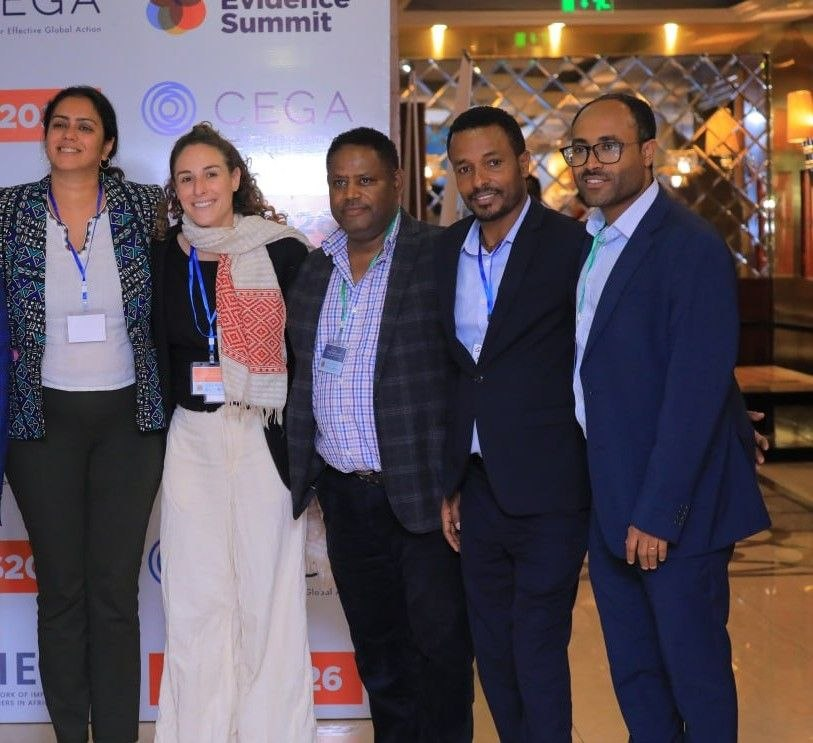
At the Africa Evidence Summit 2026 in Nairobi, Juba Kafumba of the University of Malawi and the Transfer Project at UNC's Carolina Population Center presented a long-term randomized evaluation of Malawi's Social Cash Transfer Programme (SCTP), examining whether unconditional cash transfers of about US$8 per month received during adolescence could improve physical and mental health in young adulthood. Drawing on a cluster randomized controlled trial across 29 village clusters in Salima and Mangochi districts that began in 2013 with participants aged 13–19, the study followed 2,124 young adults (about 85% retention) into ages 21–28 by 2022, comparing those with roughly six versus nine years of adolescent exposure. The findings showed that SCTP exposure significantly improved both physical and mental health, with effects substantially larger among women—mental health gains were driven almost entirely by women—and the primary drivers being reductions in hypertension (from about 41% in the control group to 34% in the treatment group, a 7-percentage-point decline estimated to reduce the hypertension-attributable fraction of cardiovascular disease risk from roughly 23.4% to 15.1%) and depression. The researchers identified plausible mechanisms including reduced poverty-related stress, improved nutrition during a critical developmental period, and cumulative benefits from longer exposure, concluding that cash transfers to adolescents should be understood not merely as short-term poverty-reduction safety nets but as long-term investments in health and human capital that can shape health trajectories well into adulthood.
News
Research to Real Change | PSI | 16 Aug 2026
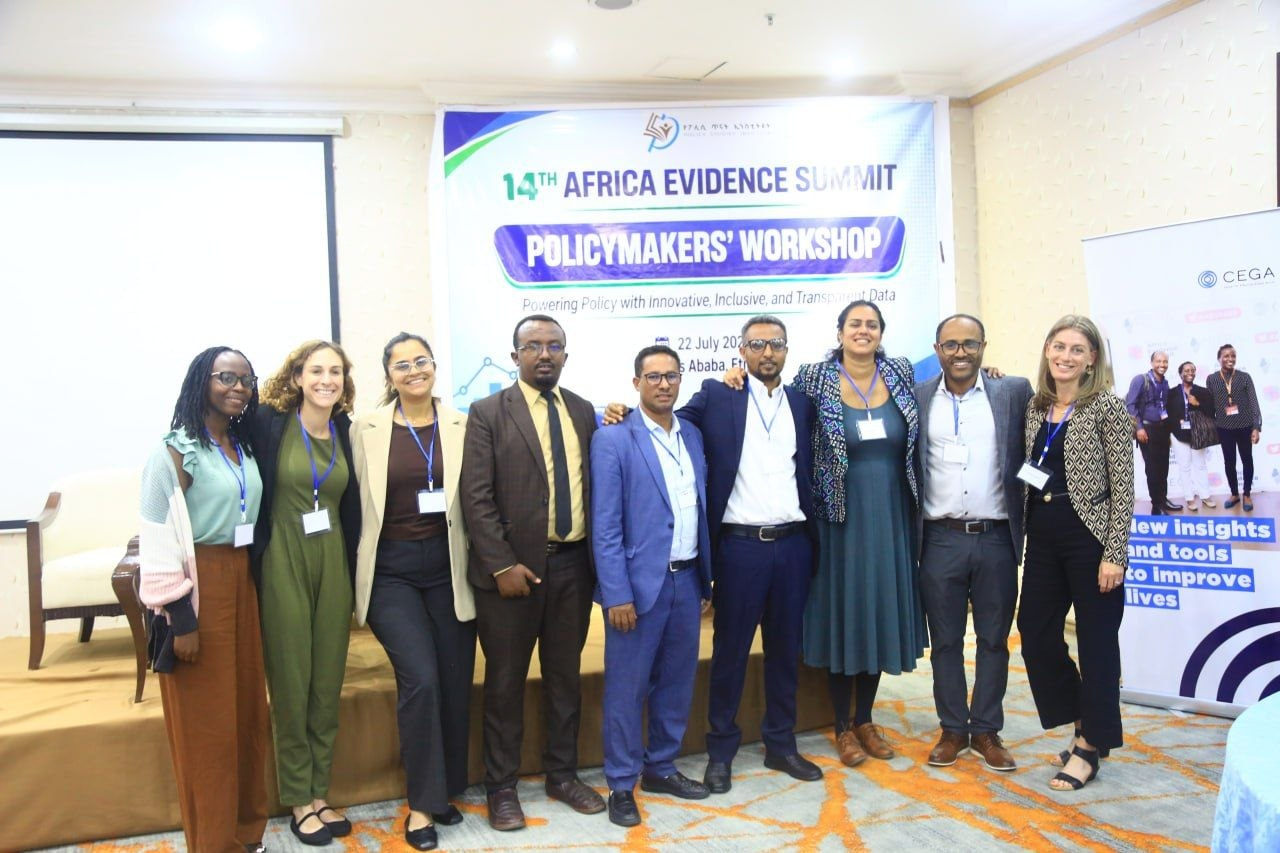
At the 2026 Africa Evidence Summit, a multi-presenter session titled "Research to Real Change: Fast-Tracking Policy for Adolescent Health"—featuring Dr. Augustina Mensa-Kwao (Johns Hopkins Bloomberg School of Public Health), Dr. Adesola Olumide (University of Ibadan), Dr. Nicola Jones (GAGE, ODI), Zekarias Desalegn (Ethiopia's Ministry of Women and Social Affairs), Workneh Yadete (Quest Consulting), and Dr. Kassahun Tilahun (Addis Ababa University)—argued that the central challenge is no longer generating data about adolescents but translating evidence into policy and practice, framing the pathway as moving from visibility to evidence to action. The presenters highlighted that the world is experiencing the largest adolescent generation in history, with approximately 33% of Ethiopia's population aged 10–24, and introduced the "triple dividend" concept—investment in today's 10–24-year-olds benefits adolescents themselves, their future adult productivity, and the next generation—while noting that despite growing recognition, development assistance for adolescent health and well-being from 2016 to 2021 remained insufficient per adolescent, even though substantial evidence already exists about effective interventions. They outlined a five-stage research-to-policy pathway (data generation, evidence creation, the research-to-policy gap, policy and practice, and meaningful change), called for multisectoral collaboration and meaningful youth participation, and pointed to the second Lancet Commission on adolescent health and wellbeing as emphasizing interconnected challenges—mental health, sexual and reproductive health, education, violence, employment, nutrition, digital environments, gender inequality, climate change, and social protection—that cannot be addressed by the health sector alone. As a concrete example, they presented the Gender and Adolescence: Global Evidence (GAGE) programme (2016–2026), a longitudinal mixed-methods study whose Ethiopian component follows approximately 20,000 adolescents (the largest such cohort in the Global South) across younger (10–12 at baseline) and older (15–17 at baseline) cohorts, using an intersectional approach that deliberately includes marginalized groups such as adolescents with disabilities, child-married girls, IDPs, and refugees, and which tracked young people through major shocks including political unrest, the COVID-19 pandemic, the Northern Ethiopia conflict, and the Amhara regional conflict. The session concluded that adolescence represents a critical window for investment, and that the goal must be to turn visibility into evidence, evidence into policy, and policy into sustainable improvements in young people's lives.
News
Mental Health | PSI | 16 Aug 2026
At the 14th Africa Evidence Summit in Addis Ababa in July 2026, Isaac Obara of the Busara Center presented an experimental study titled "Understanding Mental Health in the Workplace: An Experimental Investigation," examining how mental health affects workplace performance among young, educated, low-income jobseekers in Nairobi, Kenya, in collaboration with researchers from UC Berkeley, UCLA, Oxford, Warwick, and other institutions. Motivated by evidence that over 40% of pilot participants showed clinically significant anxiety or depression symptoms, that roughly one in eight Kenyan adolescents experiences a mental-health condition annually, and that mental disorders are the second-leading cause of lost healthy life among Kenyan youth, the study recruited participants aged 18–35 from informal settlements including Kibera and Kawangware who had at least high-school or vocational education, were available full-time for six weeks, and reported at least one depression or anxiety symptom (over 90% of participants). The research used a multi-phase experimental design in which participants completed baseline surveys, then engaged in approximately 29–30 days of laboratory-based work tasks—including data entry, AI-powered simulated customer service, cooperative data entry, promotion interviews, public speaking, a managerial allocation exercise, tower-building teamwork, and "speaking up" exercises—designed to measure routine effort, analytical ability, social interaction, assertiveness, leadership, and communication, alongside a Work-Focused Cognitive Behavioural Therapy (WCBT) intervention consisting of eight two-hour group workshops over four weeks (with cognitive restructuring and behavioural exposure), compared against a placebo workshop on environmental sustainability, with follow-up surveys at three and 12 months. Interim findings based on approximately 55% of the expected sample suggested that WCBT meaningfully improved presentation and assertiveness—treated participants were more willing to speak, negotiate, and put themselves forward—but did not substantially improve overall depression and anxiety measures, and notably benefited participants with good baseline mental health similarly to those with poor mental health, suggesting WCBT may function beyond clinical treatment as a general workplace-skills intervention. The study also found suggestive evidence that participating in work itself reduced depression and anxiety, while depression and anxiety were associated with higher dropout and non-attendance, pointing to a possible self-reinforcing "trap" in which work improves mental health but poor mental health impedes sustained work participation—underscoring the policy implication that employment and youth empowerment programmes may need to integrate mental-health support at the point of entry, while employment itself may be a pathway to improved psychological well-being.
Research Data
PSI Research Data Repository | ENVIRONMENT AND CLIMATE CHANGE POLICY STUDY RESEARCH CENTER | test, melkamu5 | ENVIRONMENT AND CLIMATE CHANGE POLICY STUDY RESEARCH CENTER | 18 Nov 2025
https://doi.org/10.1080/1523908X.2024.2364624
Research Data
PSI Research Data Repository | SOCIAL DEVELOPMENT AND INCLUSIVENESS POLICY STUDY RESEARCH CENTER | S. Scott Graham, Joshua B. Barbour | SOCIAL DEVELOPMENT AND INCLUSIVENESS POLICY STUDY RESEARCH CENTER | 11 Feb 2025
COIPonD captures author-reported disclosure information (including lack of disclosure) for over 38,000 PubMed-indexed articles published between 1949 and 2022. The collected articles are indexed by discussed drug products with a focus on the 319 most commonly...
Research Data
PSI Research Data Repository | Information and Digital Economy Department | Fikirte Zemene, Getahun Wassie, Melkamu Beyene, Teshome Alemu | Information and Digital Economy Department
We are now in the Information Technology (IT) revolution which has tremendously changed the way people think, communicate and behave at home or work place, in shopping areas or banking services, in farming and health sectors as well as in educational instituti...