
Search PSI research and content

Search PSI research and content

Filter PSI content and public repository records by keyword, topic, author or date.

16 results

Results for "Soft Skills Development"

Search includes PSI website content and live records from the PSI Research Data Repository. Open RDM ↗

News

A Pilot Randomized Controlled Trial in Ghana on Soft Skills Development for Enhanced Employability in TVET

Soft Skills Development | PSI | 16 Aug 2026

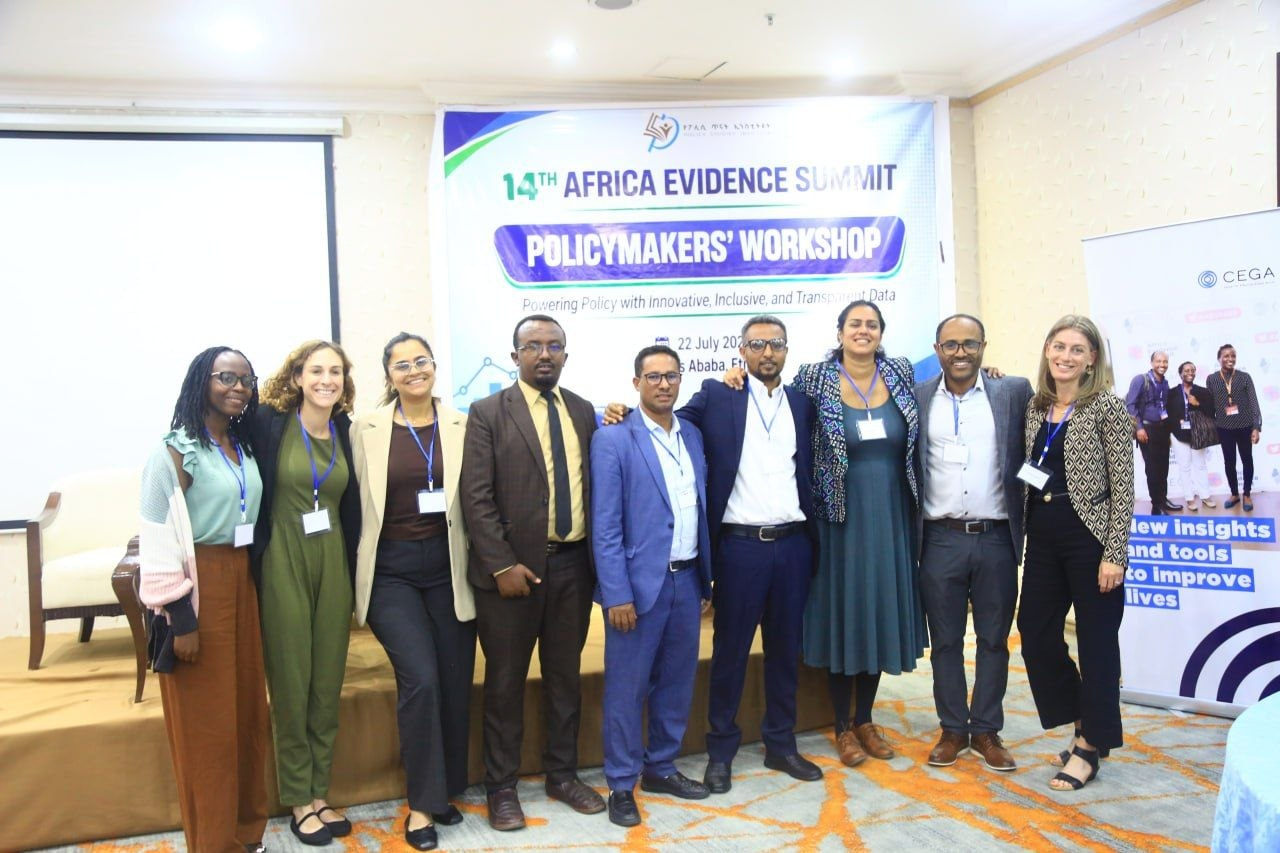
At the Africa Evidence Summit, Richard Kwasi Boso, Kwadwo Arhin, Patricia Ampofowaa Boso, and R. Kingsford Otoo presented a J-PAL/MIT-supported pilot randomized controlled trial in Ghana examining soft-skills development for enhanced employability among Technical and Vocational Education and Training (TVET) students, implemented in partnership with the Ghana TVET system and the Association of Ghana Industries. Noting that technical training alone is insufficient and that employers consistently identify communication, teamwork, problem-solving, punctuality, and professional behaviour as weaknesses among graduates, the study compared two scalable delivery models—Workplace Experiential Learning (WEL), involving four weeks of workplace placement during the August–September 2026 vacation, and Project-Based Learning (PBL), involving four weeks of six structured school-based lessons during the June–July 2026 semester—against a control group receiving usual TVET instruction, with theoretical foundations drawn from Kolb, Dewey, Lave and Wenger, and Billett. The individual-level randomized controlled trial assigned 1,842 Year 2 students from nine technical institutes across Automotive Technology, Electrical Technology, and Fashion and Design (with girls comprising roughly 23–26% of participants) within school–programme blocks to WEL (690), PBL (577), or control (575), using KoboCollect on state-provided tablets for digital data collection and a structured 4+4+2 week delivery arrangement aligned with TVET's 12–16-week semesters, with implementation in Greater Accra, Volta, and Ashanti Regions. The study's three research questions addressed WEL's impact, PBL's impact, and their comparative effectiveness, feasibility, and scalability, with the primary outcome being a standardized soft-skills index plus employability and work-readiness measures, analyzed using ANCOVA with intent-to-treat as the primary estimand, baseline adjustment, and randomization-block fixed effects, alongside pre-specified exploratory heterogeneity analyses and robustness checks. The presenters discussed theory-of-change mechanisms (workplace exposure or project tasks leading to structured practice, feedback, reflection, and ultimately soft-skills development), implementation constraints and risks (spillovers, uneven fidelity, attrition, social-desirability bias, and digital-system failures, mitigated through separated schedules, fidelity tools, group-based data collection, confidentiality assurances, and backup power/routers), and policy implications—if WEL proves stronger, invest in employer-placement systems; if PBL is comparable at lower cost, scale school-based projects; and if effects vary by gender or trade, target delivery models accordingly. They also outlined a potential pathway from the Ghana pilot to a Ghana–Kenya comparative RCT and broader replication in Rwanda, Uganda, and South Africa, inviting Summit feedback on appropriate soft-skills measures in African TVET settings, measuring employer-linked WEL, assessing WEL fidelity in informal and semi-formal work environments, balancing internal validity with scalability, and identifying useful cost-effectiveness measures—concluding that the study aims to move beyond asserting that soft skills matter toward rigorous evidence on which delivery model works, for whom, under what conditions, and at what cost.

Research Data

YOUTH, EMPLOYMENT AND SKILLS (YES) Strengthening Education and Learning Systems to deliver a 4IR-ready Workforce – the case of Ethiopia

PSI Research Data Repository | 2026_Policy Studies Institute Policy Day | Amare Matebu (PhD), Netsanet Jote (PhD), Dereje Rahmet (Msc), Sisay Sintayehu (Msc) | 2026_Policy Studies Institute Policy Day | 11 May 2026

Fast growth of working age population with limited employment opportunity: The population is growing fast at 3.02% per year and estimated to exceed 144 million in 2030 (ILOSTAT, 2019). Moreover, the labor force is growing much more rapidly than the population...

Research Data

Building TVET Systems for Economic Transformation in Ethiopia

PSI Research Data Repository | 2026_Policy Studies Institute Policy Day | Amare Matebu Kassa (Ph.D), Netsanet Jote Tollosa (Ph.D), Sisay Sintayehu Gebre (Msc), Zemene Yohannes (Msc) | 2026_Policy Studies Institute Policy Day | 10 May 2026

In many countries including Ethiopia, one of the key elements of development strategies is to support young people to acquire professional skills through Technical and Vocational Education and Training (TVET) programs. TVET systems are essential for addressing...

Research Data

Development of Ethiopian Steel Industries: Challenges, Prospects, and Policy Options (2015 –2025)

PSI Research Data Repository | 2026_Policy Studies Institute Policy Day | Tesfaye G/Michael (Msc), Moges Tufa (MA), Niguse Assefa (Msc), Teshome Abdo (PhD), Jeylan Aman (PhD), Lemi Guta (PhD) | 2026_Policy Studies Institute Policy Day | 10 May 2026

As stipulated in the Second Growth and Transformation Plan (GTP II), Ethiopia is committed to tuning its growth direction from agriculture-led to industry-led economy. In this plan, the role of industries in general and the manufacturing sector in particular i...

Research Data

Study of development of iron ore and metallurgy industries: challenges, prospects and policy/strategy options (2015 –2025)

PSI Research Data Repository | 2026_Policy Studies Institute Policy Day | Idris Zeherudin (PhD), Alem Baraki (Msc), Hadush Berhe (Msc) | 2026_Policy Studies Institute Policy Day | 10 May 2026

As stipulated in the Second Growth and Transformation Plan (GTP II), Ethiopia is committed to tuning its growth direction from agriculture-led to industry-led economy. In this plan, the role of industries in general and the manufacturing sector in particular i...

Research Data

Study of Agro-Food Processing Industries in Ethiopia: Policy and Strategy Options for its Development (2015-2025)

PSI Research Data Repository | 2026_Policy Studies Institute Policy Day | Solomon Workneh (PhD), Melkamu Mengistnew (Msc), Admasu Fanta (Asst Prof.), Fentahun Tesafa (Asst Prof) | 2026_Policy Studies Institute Policy Day | 10 May 2026

As stipulated in the Second Growth and Transformation Plan (GTP II), Ethiopia is committed to tuning its growth direction from agriculture-led to industry-led economy. In this plan, the role of industries in general and the manufacturing sector in particular i...

Research Data

Conflicts of Interest Publication Disclosures (COIPonD) Dataset TEST

PSI Research Data Repository | SOCIAL DEVELOPMENT AND INCLUSIVENESS POLICY STUDY RESEARCH CENTER | S. Scott Graham, Joshua B. Barbour | SOCIAL DEVELOPMENT AND INCLUSIVENESS POLICY STUDY RESEARCH CENTER | 11 Feb 2025

COIPonD captures author-reported disclosure information (including lack of disclosure) for over 38,000 PubMed-indexed articles published between 1949 and 2022. The collected articles are indexed by discussed drug products with a focus on the 319 most commonly...

Research Data

Agri-Chain Analysis of Cotton Sub-Sector in Ethiopia

PSI Research Data Repository | Agriculture and Rural Development Department | Merima Abudullahi, Gezahegn Ayele | Agriculture and Rural Development Department

This report presents results of a study conducted by EDRI on “AgriChain Analysis of Cotton Sub-Sector in Ethiopia”. It focuses on an analysis of cotton value chain in Ethiopia. The study has generated useful information on value addition for the cotton sub- se...