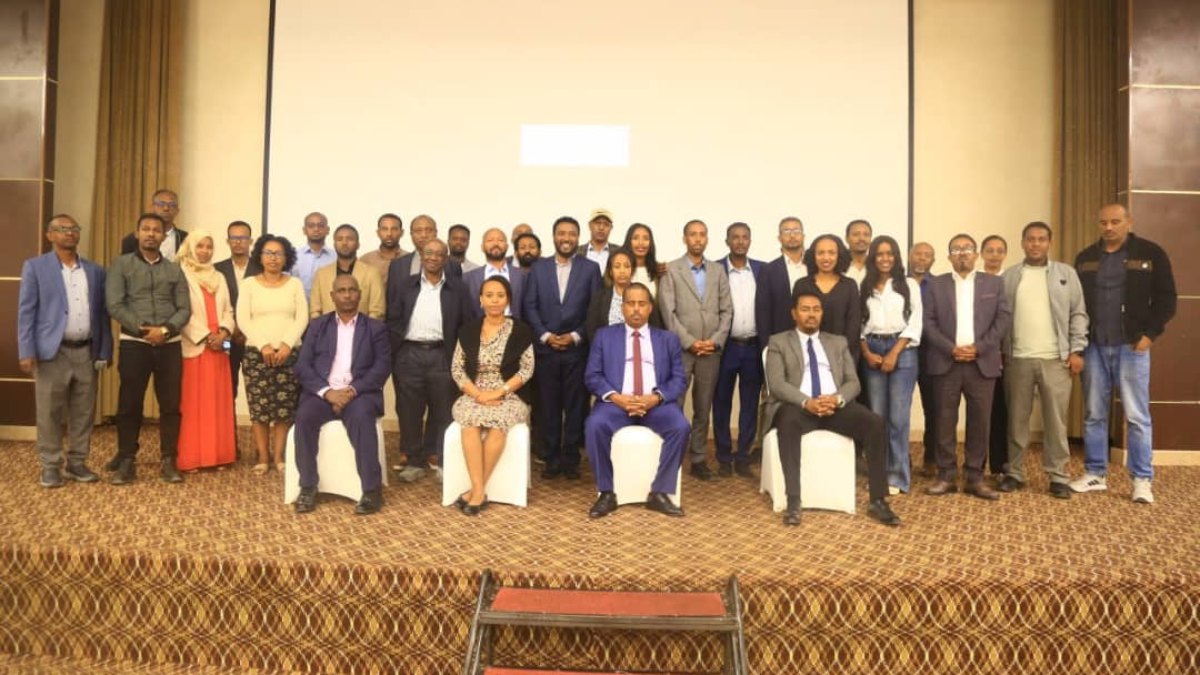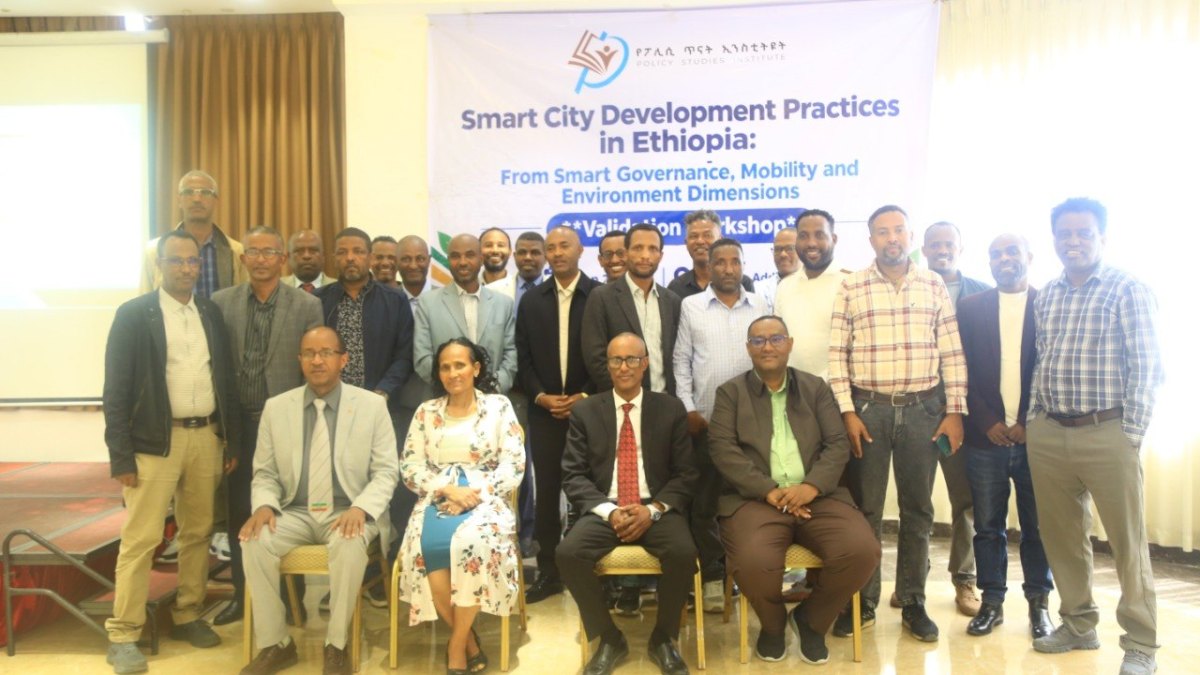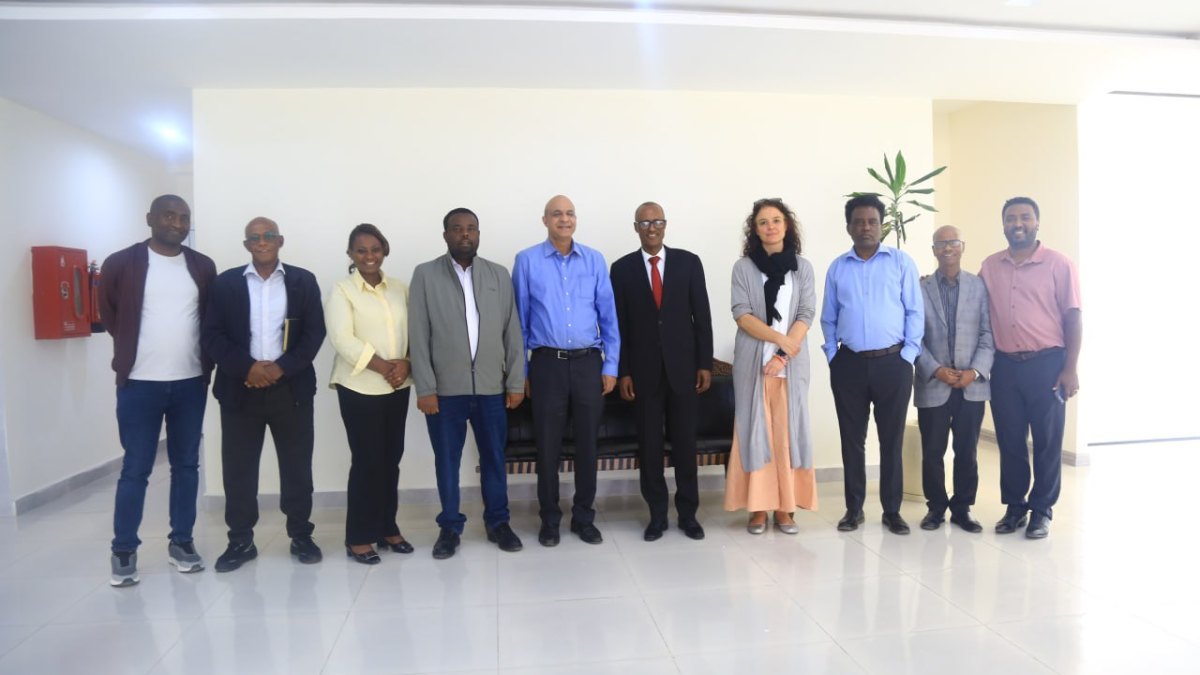
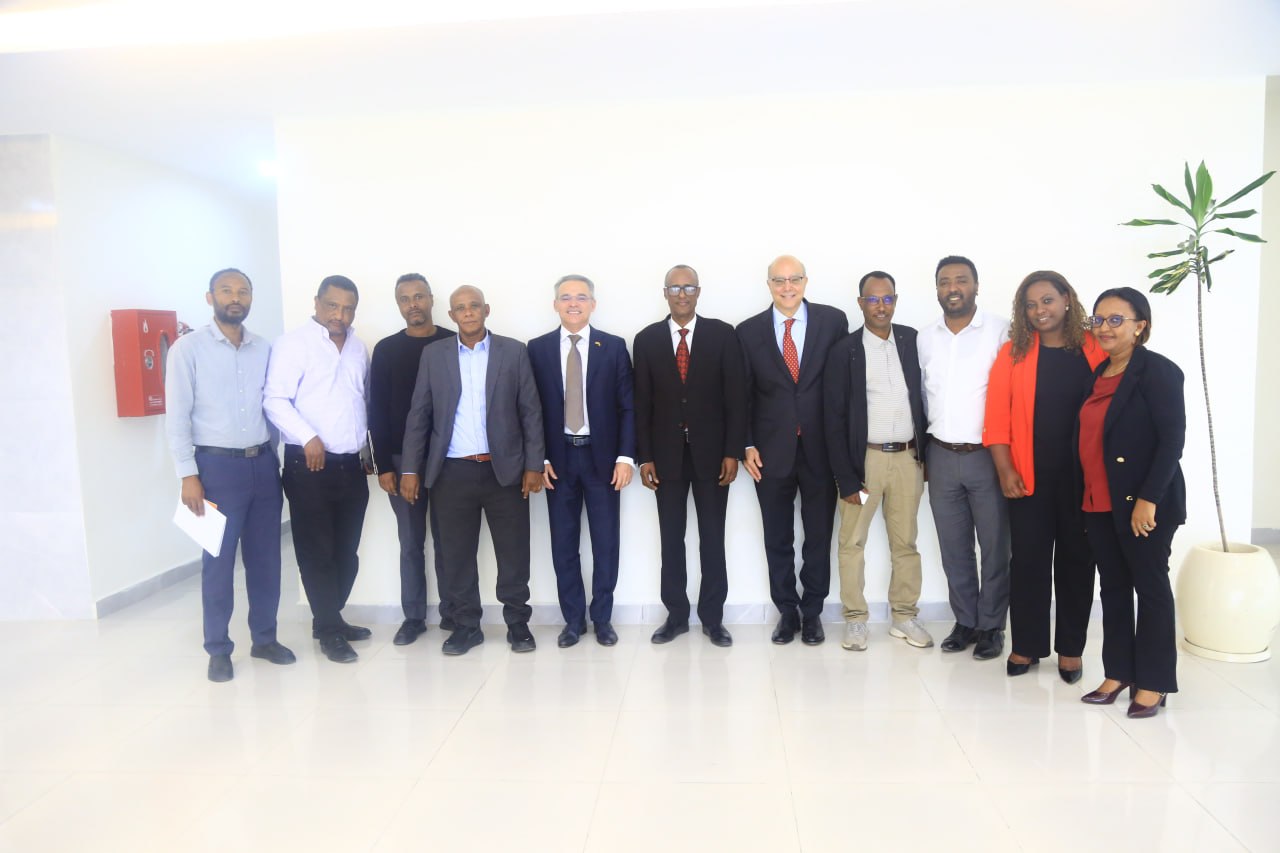
The Policy Studies Institute (PSI) hosted a US expert accompanied by staff members of the US Embassy in Ethiopia for a visit aimed at strengthening dialogue and exploring opportunities for collaboration. The visit provided an opportunity for the expert and PSI representatives to exchange views on areas of mutual interest, discuss ongoing research and policy initiatives, and explore potential avenues for future cooperation.
H.E. Major General Ahmed Hamza, Deputy Director General of the Policy Studies Institute , warmly welcomed the US expert and members of the US Embassy staff in Ethiopia to the Institute. In his welcoming remarks, H.E. Major General Ahmed Hamza expressed his appreciation for the visit and highlighted the importance of strengthening engagement and professional exchange between PSI, US experts, and the US Embassy. He noted that such visits provide valuable opportunities to share experiences, exchange knowledge, and identify areas of mutual interest in research, policy analysis, evidence-based policymaking, and institutional development. He also welcomed the opportunity for an open and constructive dialogue on issues of common interest and expressed PSI’s readiness to explore possible areas of collaboration with relevant US institutions and partners.
H.E. Major General Ahmed Hamza, Deputy Director General of PSI
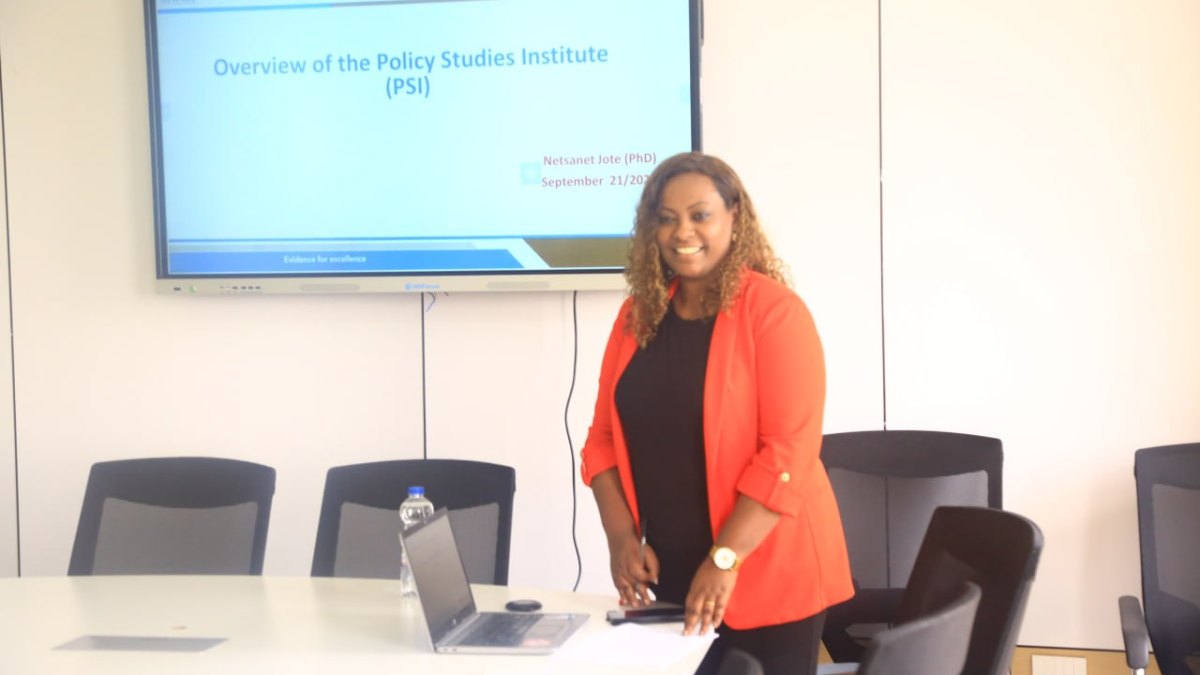
Dr. Netsanet Jote, Lead researcher and head of the Research development and Data Management Centre at PSI, explained that PSI was a government think tank established in 2018 through the merger of the Ethiopian Development Research Institute (EDRI), which was established in 1999, and the Policy Studies and Research Center. As a result, PSI considers its institutional experience to date from the establishment of EDRI and therefore has approximately 27 years of experience in policy research.
Dr. Netsanet said that PSI’s main role was to provide evidence-based policy recommendations to the government. The institute conducts research across 52 thematic areas and maintains extensive national and international networks. It was reported that PSI has more than 95 institutional networks with national and international organizations and also engages temporary researchers, research assistants and data collectors for its research activities. According to the representative, PSI’s researchers also maintain individual professional networks, numbering more than 4,800 connections with researchers and professionals.
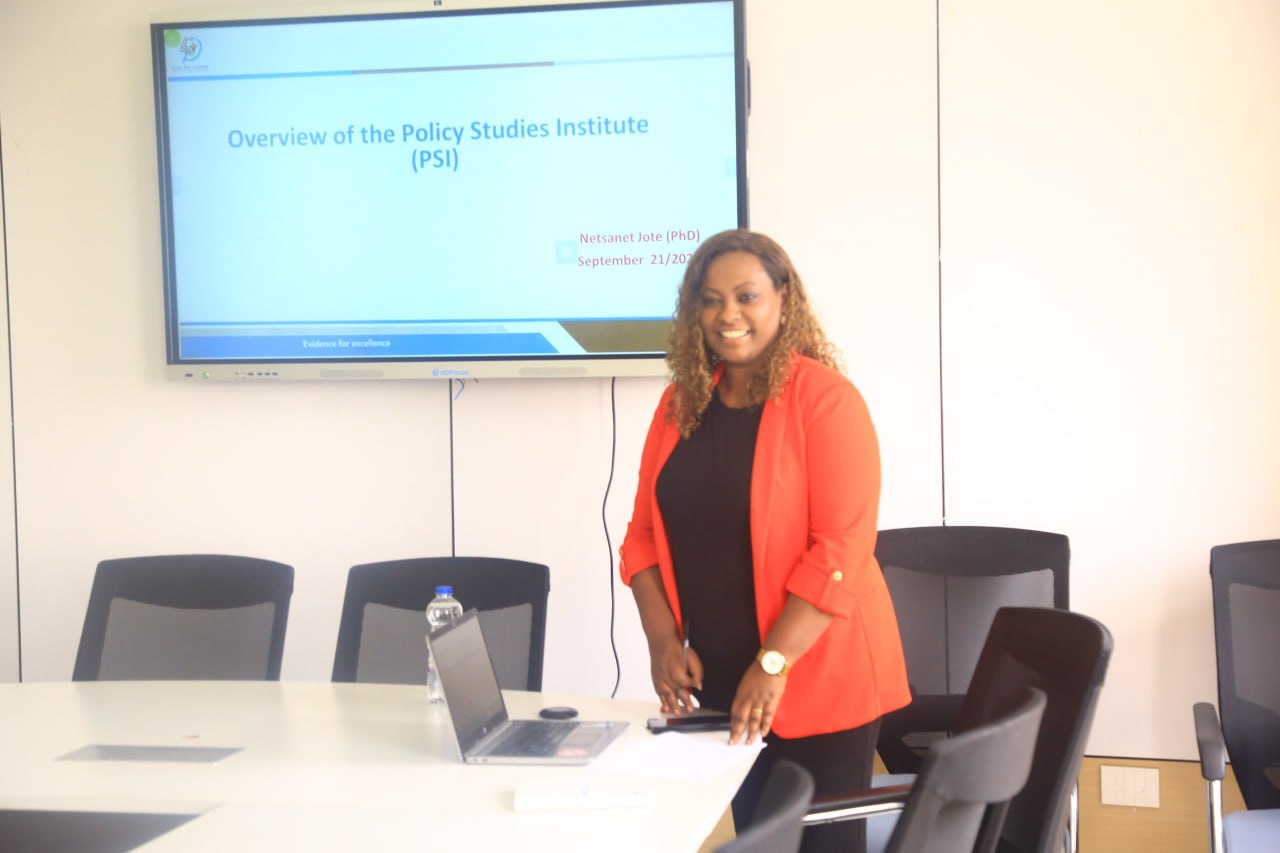
Dr. Netsanet Jote, Lead Researcher and Head of the Research Development and Data Management Centre
Dr. Netsanet further stated that PSI’s vision was to become one of the top three think tanks in Sub-Saharan Africa by 2031. PSI was reportedly ranked eighth at the time of the presentation, and the institute was working to improve its position and achieve its 2031 vision.
Regarding its mandate, Dr. Netsanet explained that PSI had approximately 12 responsibilities under its governing regulation, with four major areas of responsibility. First, the institute conducts studies and research to identify gaps in existing policies and strategies and provides evidence-based recommendations to address those gaps. Second, PSI undertakes research to develop new policy ideas, drawing on the experiences of other countries and adapting them to Ethiopia’s context.
Third, PSI conducts impact assessments of existing policies and strategies to examine their effects on society and provide recommendations for improvement. Fourth, the institute provides consultancy services and capacity-building programmes based on its experience in policy research. These activities include training on policy formulation, policy brief writing and other policy-related areas. PSI also provides consultancy services to government institutions and other organizations on policy-related issues.
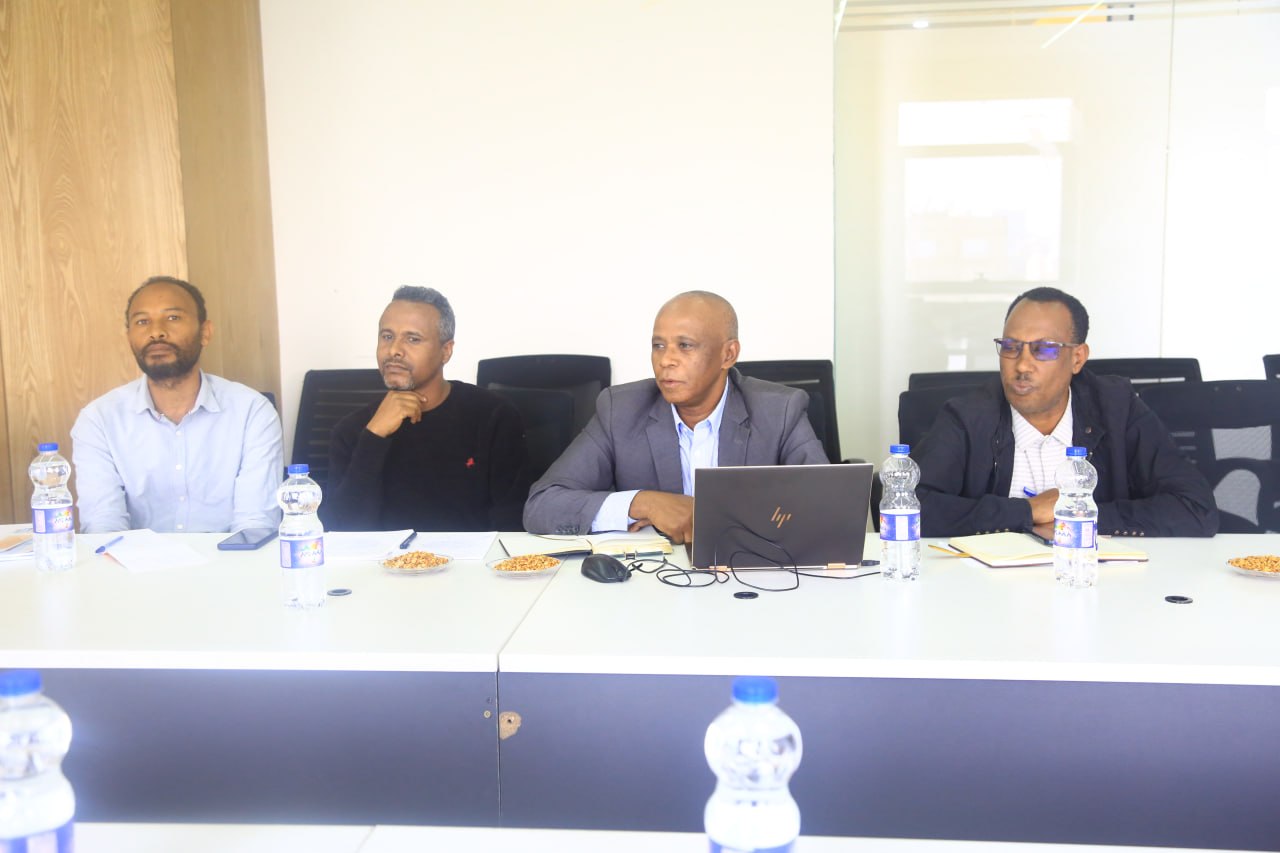
The representative also outlined PSI’s organizational structure. The institute is accountable to the Ministry of Planning and Development and is led by a Director General and three Deputy Directors General. Its research activities are organized under six research centres: the Macro Finance and Trade Policy Research Center; the Industry, Urban and Infrastructure Center; the Agriculture and Rural Development Policy Study and Research Center; the Social Poverty and Human Resource Policy Study and Research Center; the Good Governance Policy Studies and Research Center; and the Environment and Climate Policy Study and Research Center.
These six research centres oversee 14 departments. The representative stated that PSI had more than 80 researchers, of whom more than 40 held PhD degrees, while the remainder held master’s degrees.
The representative also highlighted PSI’s contributions to sectoral policymaking. In the areas of manufacturing, trade and technology, PSI had contributed to the development of national policies and strategies, including the National Science, Technology and Innovation Policy, the Manufacturing Policy, the African Continental Free Trade Area (AfCFTA) National Strategy, the Ethiopia Manufacturing Industry Linkage Strategy, and performance-based initiatives and related packages.
According to the representative, PSI had contributed to some of these initiatives by participating directly in policy formulation, while in other cases it had provided policy ideas and recommendations based on its research and evidence.
Dr. Netsanet further highlighted a number of the institute’s recent contributions to sectoral policymaking. In urban development and housing, PSI had contributed to the Housing Development Policy, the Residential Housing Grant Control and Administration Proclamation, the Urban Land Lease Proclamation, and the National Housing Fund. In education, the institute had contributed to the National Education and Training Policy, the revision of the Ethiopian TVET strategy, and the revision of the secondary school curriculum.
In agriculture, environment and climate change, PSI had contributed to the National Urban Agriculture Development Strategy and other related initiatives. In the area of social policy and inclusion, its contributions included the National Disability Policy, the Gender-Responsive Budgeting Manual, and Daycare Standards and Operational Guidelines.
The representative also noted PSI’s contribution to institutional development, including agenda-setting for the National Dialogue Commission and identifying priority agendas for the BRICS Summit. These were described as some of the institute’s recent and important contributions to sectoral policymaking, although the representative noted that PSI had made many additional contributions across different areas.
The representative further explained that PSI had contributed to the establishment or development of several institutions and national initiatives. The concept of industrial clusters and special economic zones, for example, had initially been developed through the work of EDRI and later evolved into the current approaches to special economic zones and industrial parks. The representative also cited the Ethiopian Commodity Exchange, the Ethiopian Kaizen Institute and the Ethiopian Biotechnology Institute as institutions whose establishment or development had been supported by recommendations originating from the institute’s research.
PSI had also contributed to major national flagship programmes, including the Agricultural Growth Programme (AGP I and AGP II). The representative stated that PSI had competed with a large number of national and international think tanks and organizations and had been selected to contribute to the programme. The work had subsequently been completed, with the representative describing its outcomes as positive.
Other areas of contribution included the Homegrown Economic Reform, the Productive Safety Net Programme and SME risk financing. The representative also noted that PSI was currently involved in the mid-term review of Ethiopia’s Ten-Year Development Plan. The review was intended to assess progress during the first five years of implementation and identify areas for improvement during the remaining five years.
The representative also highlighted PSI’s capacity-building activities. The institute provides training to government institutions, universities and NGOs in areas including policy formulation, policy brief writing, grant writing, project management, networking and impact analysis. PSI was therefore described as having considerable experience in policy-related capacity building.
In addition, PSI had developed institutional platforms and mechanisms to support research, including a data repository and an institutional research ethics review committee. The representative said that the committee was licensed by the Ministry of Education and was responsible for certifying PSI researchers in relation to research ethics. PSI also organizes international conferences in collaboration with national and international organizations.
The representative further noted that PSI provides consultancy services to government institutions and other organizations. Its researchers had participated in the development of various national strategies, including the National Bioeconomy Strategy, Gender Policy, Seed Policy, Housing Development Policy and SME Policy. PSI also works with a range of international organizations and Ethiopian government ministries.
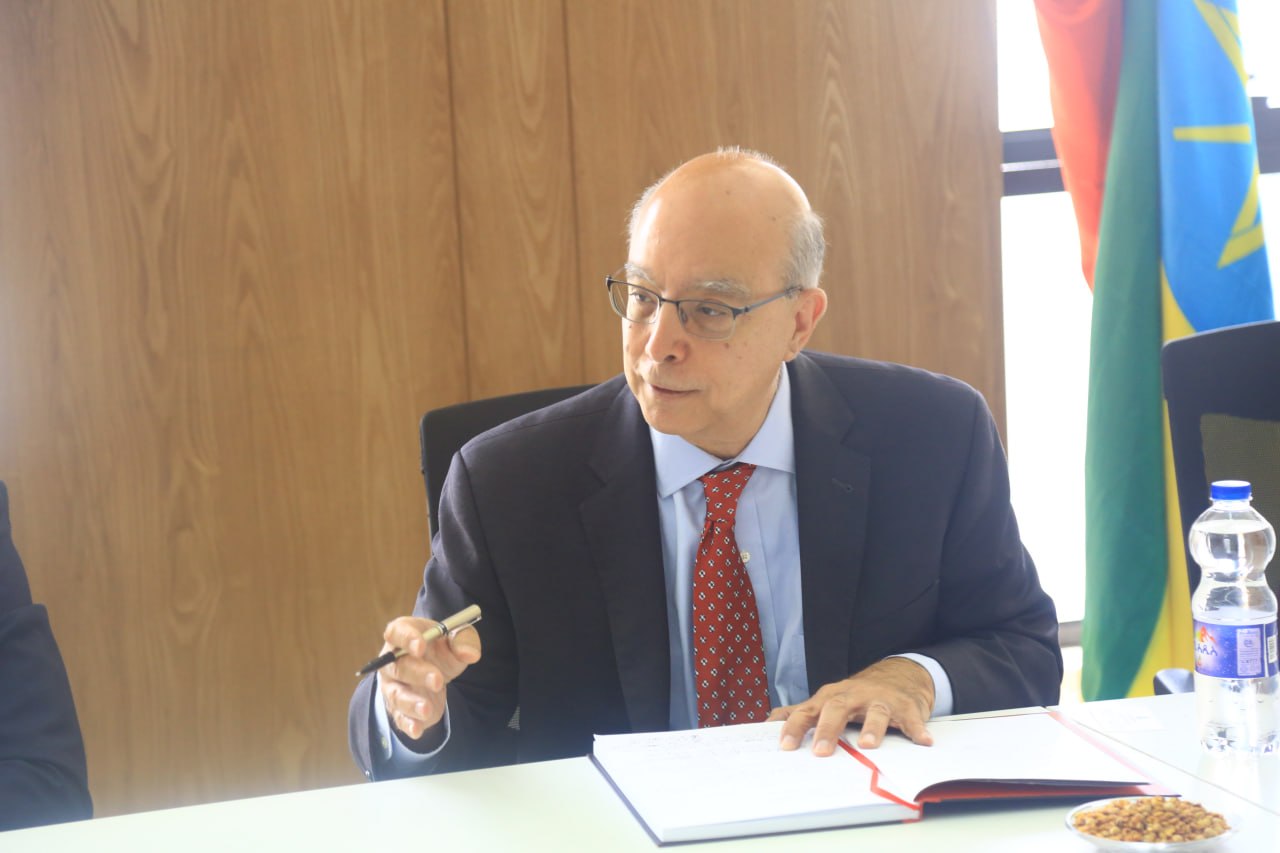
Following the presentation, the expert from the USA thanked PSI for what he described as an extensive overview of the institute’s work. He said that he had not previously realized the full scope of PSI’s combined research and policy activities and noted the potential for significant synergies between the two institutions.
The expert from the USA explained that his initial interest in engaging with PSI was related to informal settlements and the challenges associated with providing utility services to rapidly growing urban populations. He referred to a PSI publication on Informal Settlement Expansion in Ethiopian Cities: Challenges and Policy Options, which he said had motivated him to reach out to the institute.
He explained that, unlike meetings where his organization normally provides training or capacity-building support, his purpose in the meeting was initially to listen and learn from PSI researchers. He said he was particularly interested in understanding the relationship between informal settlements and the provision of electricity, water, wastewater and sanitation services.
According to the expert from the USA, informal-settlement residents should also be considered from an economic perspective because they already constitute a significant group of existing or potential utility customers. He argued that utilities would have to allocate resources to serve these populations regardless of their settlement status and that the key question was how services could be provided in an economically, socially, environmentally and humanely appropriate manner.
He cited the potential growth of informal-settlement populations in Addis Ababa and suggested that utilities such as the Addis Ababa Water and Sewerage Authority would need to consider these residents as an important customer group when planning future service provision.
The expert from the USA also introduced the issue of utility tariffs. He said that his organization had extensive experience with utility tariff-setting and suggested that understanding the affordability levels of informal-settlement residents would be important for designing appropriate tariffs. He noted that information on household affordability could help determine whether measures such as lifeline tariffs were necessary and what levels of tariffs residents could realistically afford.
He further observed that residents of informal settlements often pay substantially more for water than they might pay if they received services directly from formal utilities. He made a similar observation regarding electricity, noting that informal or unauthorized connections could be unsafe and potentially more expensive than formal utility connections.
Drawing on an example from Côte d’Ivoire, where he had visited an informal settlement, the representative said that he had observed extensive access to electricity among residents despite the informal nature of the settlement. He suggested that the experience could potentially provide lessons on how connection costs and other barriers to electricity access might be addressed, although he acknowledged that he did not know precisely how the arrangements had been implemented.
The representative then asked PSI participants whether they considered it reasonable to examine the relationship between informal settlements and utility services, particularly in relation to affordability, tariff design and access to formal electricity and water services.
A PSI participant responded that the informal status of settlements could itself create challenges for accessing secure and legally recognized utility services. The participant explained that informal settlement status could affect the ability of residents to obtain formal electricity services and could require consideration of different service-delivery or tariff structures.
Another participant noted that PSI had already conducted studies in some informal settlements and had collected information from approximately 1,000 households in one of the study areas. The participant suggested that an important starting point would be to establish a clear understanding and definition of what constitutes an informal settlement in the Ethiopian context.
The discussion therefore focused on the need to better understand the characteristics of informal settlements, the barriers residents face in accessing formal utility services, and the implications of affordability and tariff design for extending electricity, water and sanitation services to these communities.
The discussion then turned to the criteria used by utilities to provide services to residents of informal settlements. Participants noted that the requirements for obtaining access to electricity had become less formal over time. Previously, applicants were required to provide more extensive documentation, including proof related to their property or land status. More recently, the requirements had reportedly been simplified, with digital identification and other basic forms of identification increasingly being accepted.
One participant explained that the experience of electricity access demonstrated that formal land ownership documents were not necessarily required for residents to obtain electricity connections. The participant reported that approximately 69.9 percent of the study sample had formal electricity connections. Although these residents did not necessarily have formal land titles, they were connected to the electricity platform.
The discussion also considered the costs associated with obtaining electricity connections and meters. Participants explained that residents were required to pay the applicable service and connection charges, regardless of whether they lived in formal or informal settlements. Residential customers were generally treated within the residential customer category and were therefore subject to the relevant residential fees and tariffs.
Participants noted that only a small proportion of the surveyed households had no access to electricity. According to the study findings presented during the discussion, approximately 2 percent of the sample had no electricity access, while the majority had access through different forms of connection.
The situation was described as different in the case of water services. Participants explained that access to water remained more closely linked to land and property-related requirements in some cities. In such cases, residents might need to provide documentation relating to land ownership or possession in order to obtain formal water services. This was identified as one possible reason for the difference between electricity and water access among informal-settlement residents.
The expert from the USA asked about the costs associated with obtaining an electricity meter and whether residents of informal settlements faced different charges from formal residents. Participants clarified that the electricity utility generally applied the same customer categories and relevant charges to residential customers, whether they lived in formal or informal settlements.
The expert from the USA said that the findings suggested that once informal-settlement residents were connected and metered, they could generally pay the regular residential tariff, potentially including any applicable lifeline tariff. He noted that the high level of electricity access reported in the study was significant and raised a question about why water access appeared to remain more difficult.
He suggested that the difference between electricity and water access deserved further investigation, particularly by examining the economic incentives and service-delivery approaches used by the two utilities. He proposed comparing the economics of providing electricity and water services to informal-settlement populations and examining whether similar approaches could be applied to water services.
The expert from the USA also suggested that PSI and relevant stakeholders could explore mechanisms for creating a stronger link between informal-settlement residents and utility providers. He proposed that PSI could potentially help facilitate dialogue between the two sides so that residents and utilities could better understand each other's needs and constraints.
He further suggested that different service-delivery options could be identified and assessed economically. These might include several alternative approaches, such as community kiosks or other service models, depending on the specific circumstances of each settlement. The proposed analysis would compare the different options and assess their economic implications in order to identify potentially appropriate ways of serving informal-settlement communities.
The representative concluded that, despite the limited time available for the discussion, the issue deserved further consideration. He expressed interest in pursuing the topic and exploring whether there was an opportunity for further collaboration between PSI, informal-settlement communities and utility providers.
The discussion continued with a presentation on a seven-step approach to utility tariff setting, followed by an exchange on possible collaboration between PSI and the visiting experts.
The visiting expert explained that utility tariff-setting in the United States followed an established seven-step process that had been applied for decades across electricity, gas, water and wastewater utilities. He said that the process provided a consistent framework for utilities seeking approval for tariff increases through regulatory commissions.
The first step, he explained, was to establish a uniform system of accounts. Such a system provides standardized categories for recording utility assets and operation and maintenance expenses. He noted that established systems of accounts were publicly available in the United States and could be adapted by utilities elsewhere without necessarily adopting the entire hierarchy of accounts.
The second step was to organize total costs according to an internationally recognized accounting framework. He explained that utilities could organize their costs using appropriate accounting approaches, including cash-based or rate-of-return frameworks.
The third step involved separating costs according to the type of utility service. For a water utility, for example, costs would need to be separated between water supply and wastewater or sanitation services. This separation would make it possible to determine the costs associated with each service before tariffs were established.
The fourth step involved allocating the identified costs across different customer classes. The expert explained that expenses and asset-related costs could be distributed among residential, commercial, industrial, agricultural and other customer categories. This would allow utilities to determine the actual cost of serving each category of customer.
The fifth step was to use this information to determine the level of subsidy associated with each customer class. Once the cost of serving each category and the amount actually charged were known, the difference could be quantified as a subsidy. The expert said that this would provide an objective basis for determining the level of subsidy provided to different customer groups.
He said that such an approach could also support a gradual movement toward tariffs that more closely reflected the actual cost of service. Rather than relying primarily on estimates or political decisions, tariff adjustments could be based on quantified costs and subsidies, thereby making the process more objective and less politicized.
The expert further explained that the cost information could then be incorporated into tariff-setting while taking household and customer affordability into account. He noted that only a relatively limited portion of the population might be able to absorb substantial increases in utility prices.
In this regard, he suggested that Ethiopia could potentially use its existing social safety-net programmes to protect vulnerable households. Once the subsidy levels and affected customer groups had been identified, the beneficiaries of social protection programmes could be used to help identify households that might require assistance when tariffs were increased. Customers who were able to pay higher tariffs could then contribute more toward the cost of infrastructure and service provision.
The expert summarized the approach as a way of establishing an objective, evidence-based tariff-setting system that combines cost analysis, customer classification, subsidy assessment and affordability considerations.
Following, participants discussed how the issues could be taken forward. The visiting expert explained that he was scheduled to meet representatives of the relevant ministry and authority later that day and planned to meet officials from the electricity sector and Addis Ababa Water and Sewerage Authority the following day. He said that he intended to raise the issues discussed at PSI and explore opportunities for collaboration with the relevant institutions.
A PSI representative explained that PSI's existing research had already been communicated to relevant stakeholders and that the visiting expert could consult the research and engage directly with stakeholders for additional information. The representative also offered to remain available for further communication and clarification and provided contact details for continued engagement.
The PSI representative expressed interest in further collaboration, emphasizing that the institute's mandate was to conduct research on economic and social issues and provide evidence-based advice to the government. The representative noted that PSI's research could provide useful information for the expert's subsequent discussions with government ministries and other authorities.
The visiting expert thanked PSI for its hospitality and described the discussion as rich and useful. He said that the information and perspectives shared during the meeting would inform his subsequent engagements with government institutions.
Before concluding, the visiting expert identified two additional issues that he considered important for Ethiopia's future policy and regulatory discussions.
The first was the growing role of data centers. He said that data centers could create significant opportunities but could also impose substantial demands on infrastructure and existing customers. He noted that data centers could consume large amounts of electricity and water and therefore required careful consideration of how their costs and potential impacts would be addressed. He referred to emerging experience in the United States concerning safeguards for other customers in the context of expanding data-center demand.
The second issue concerned large-scale agricultural initiatives. He noted that Ethiopia was implementing major agricultural programmes involving external actors and raised the question of whether incremental or average costing approaches should be applied to such activities. He emphasized that large agricultural initiatives should generate economic benefits and revenues rather than create an unintended subsidy burden for other customers.
The meeting concluded with appreciation from both sides for the discussion and the potential for continued engagement. Participants agreed to remain in contact and explore opportunities for further collaboration on utility services, tariff-setting, research and related policy issues.